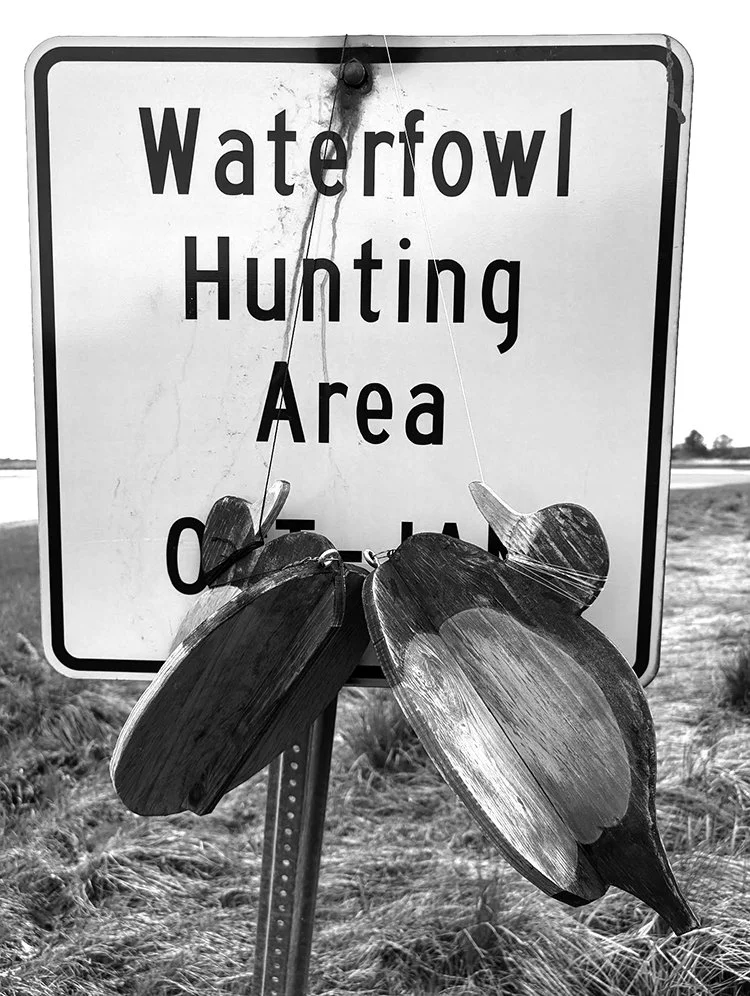
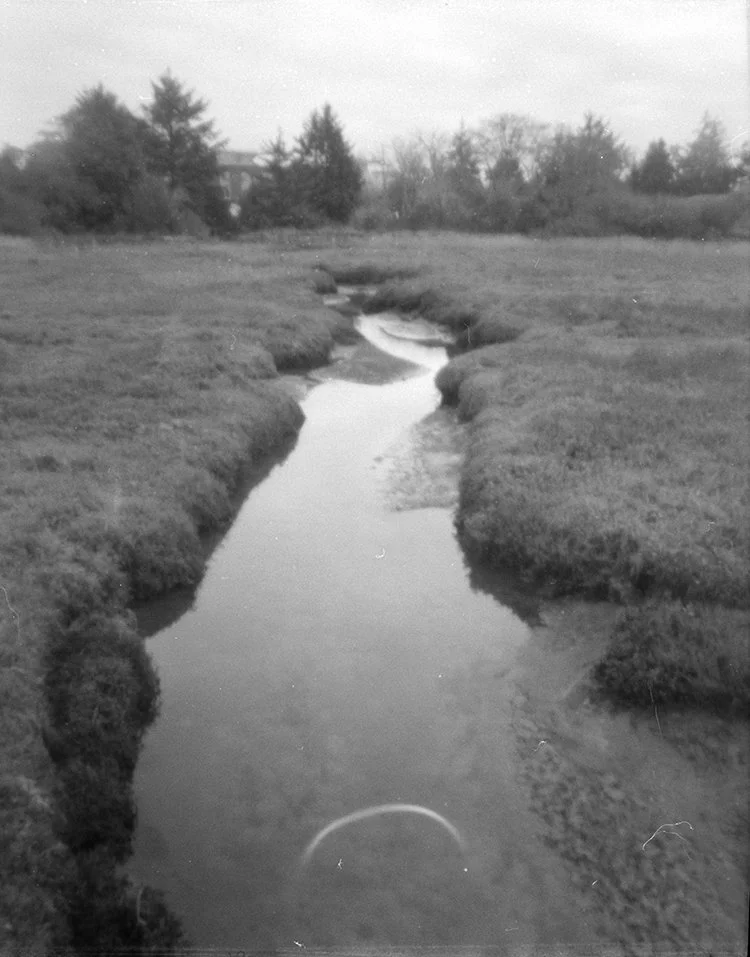
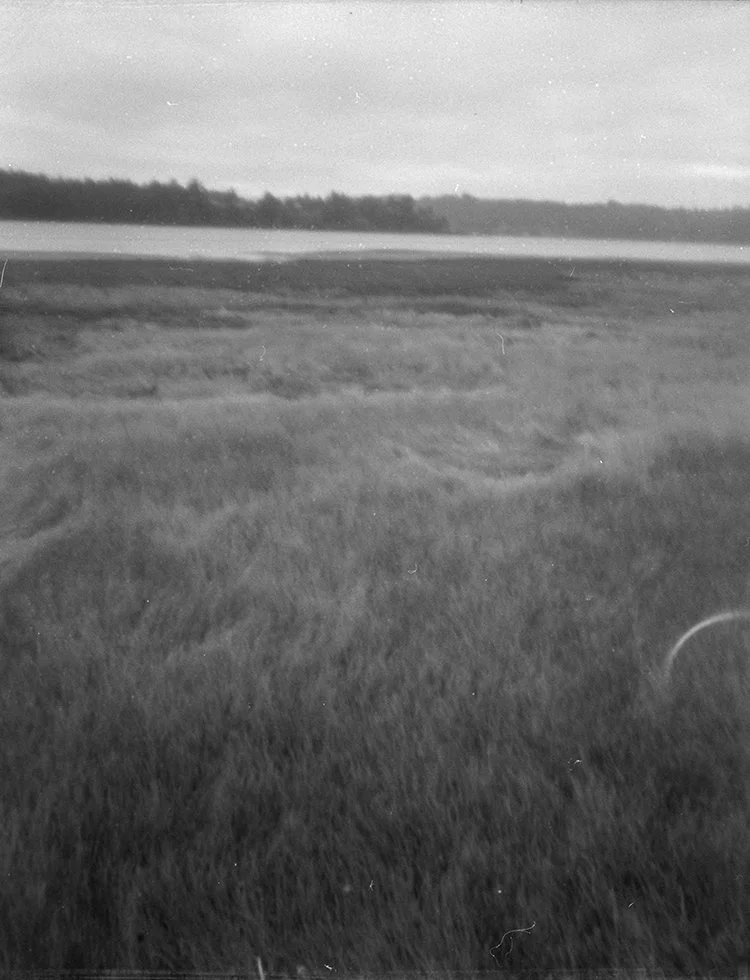
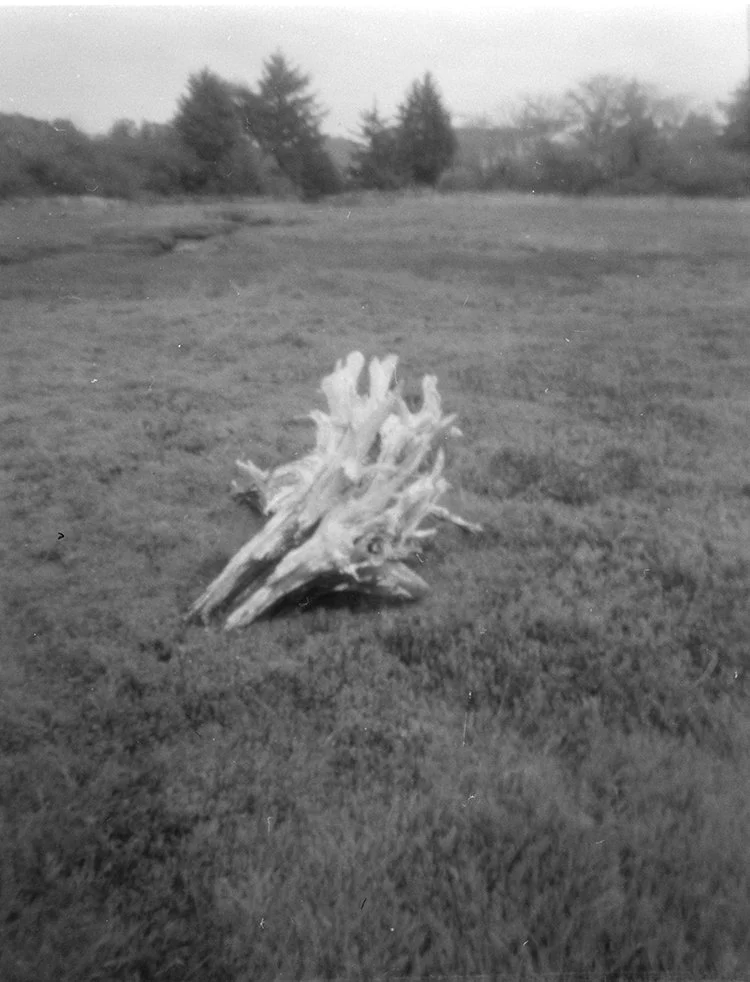
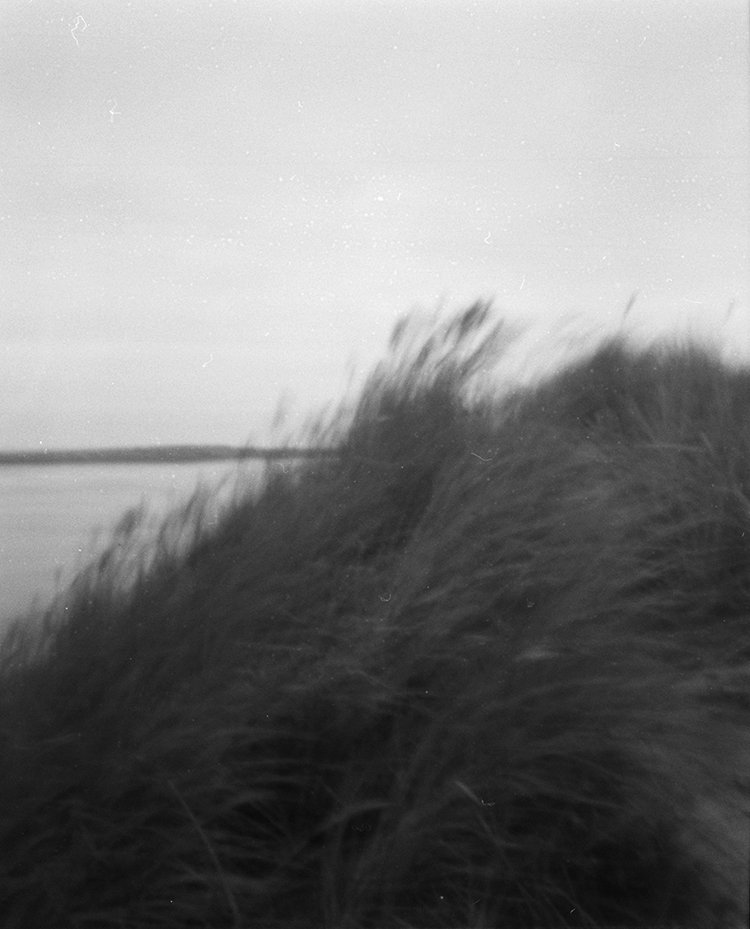
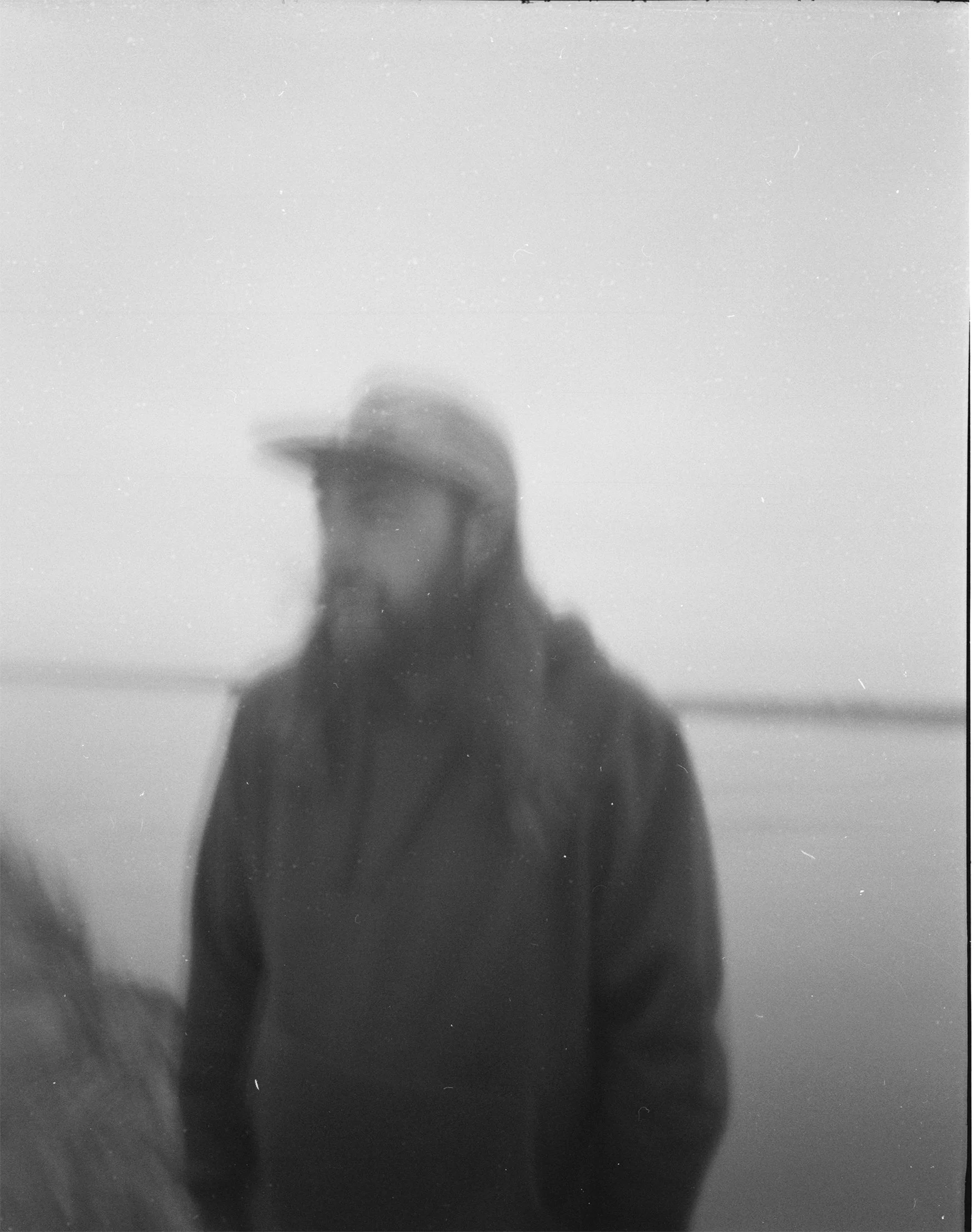
Some moody home developed black and white negative film.
Holga 120 Camera / Ilford HP5 / 400 ISO
Anthony Pedro
Some moody home developed black and white negative film.
Holga 120 Camera / Ilford HP5 / 400 ISO
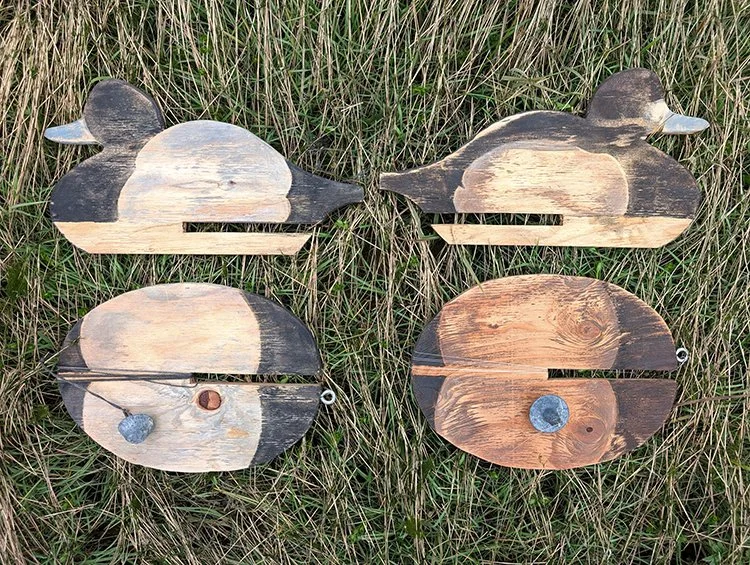
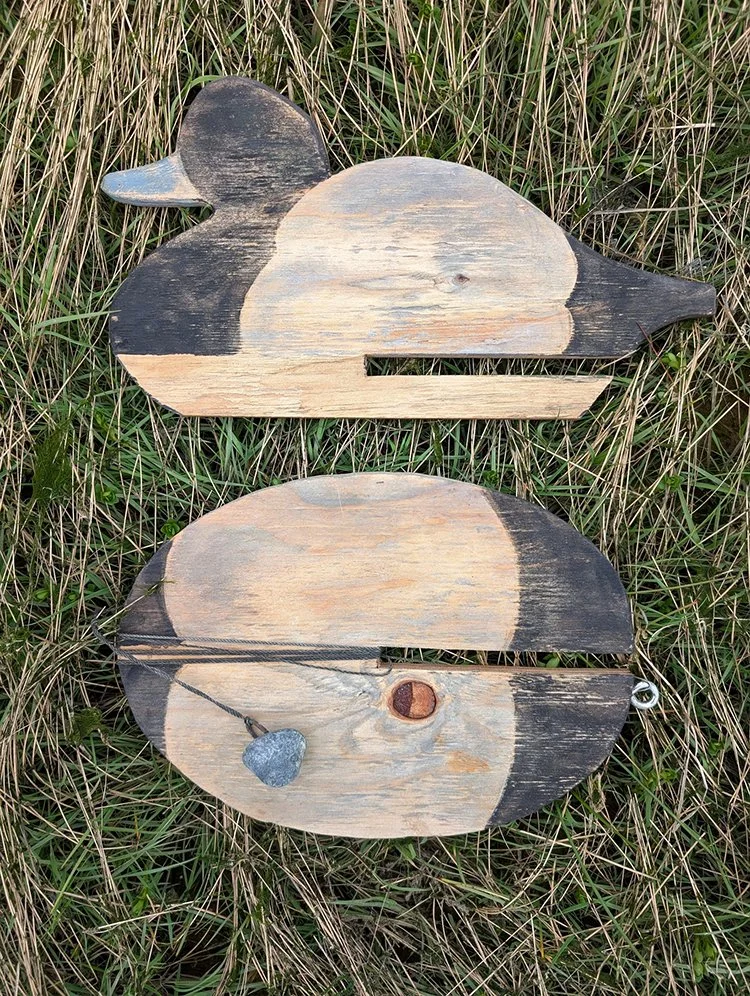
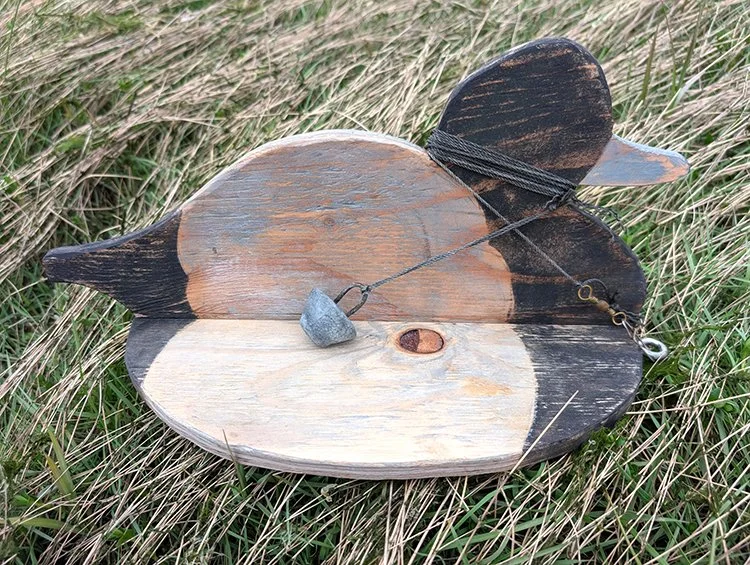
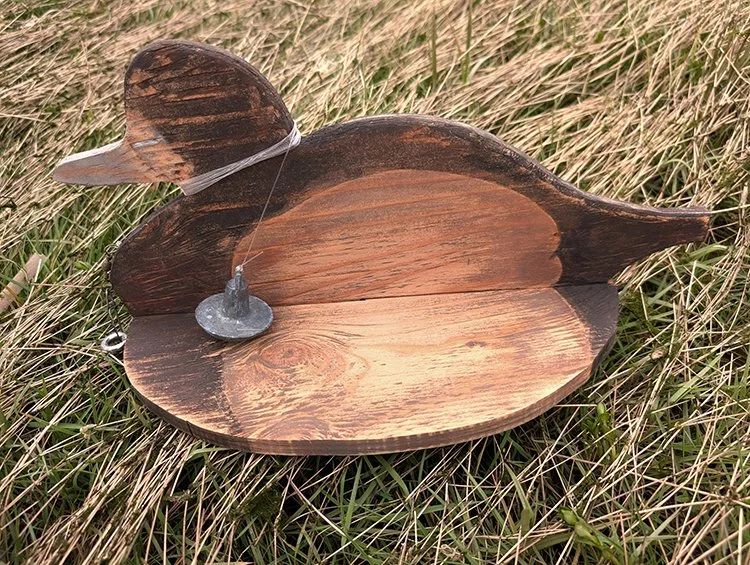
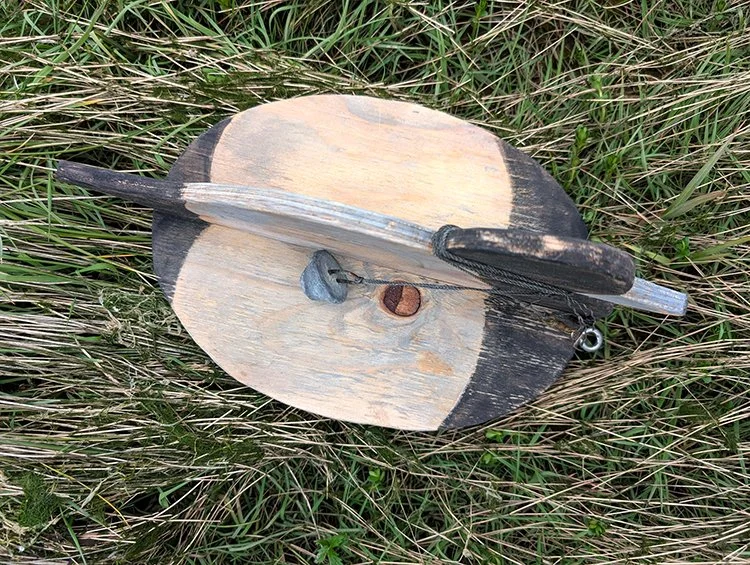
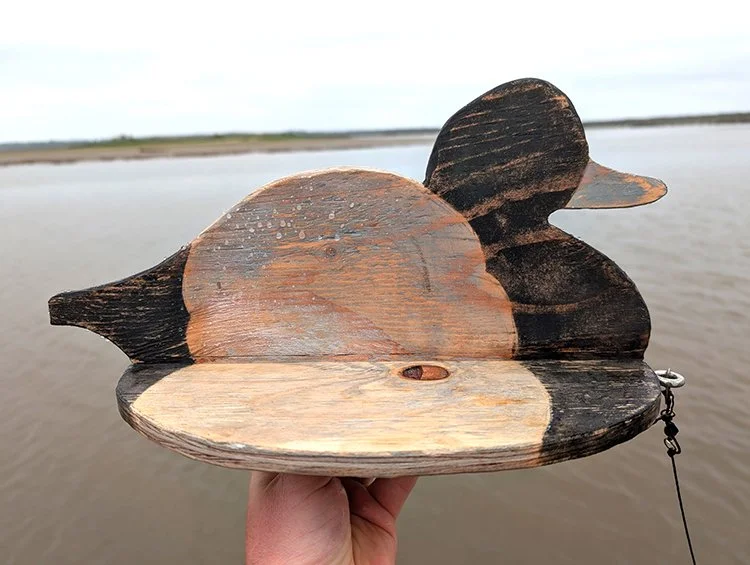
Wooden silhouettes appealed to hunters who required large numbers of lightweight, transportable waterfowl decoys that were made cheaply and quickly using only sawed boards and a fastening point for line and anchor.
Fifty to upwards of two hundred “flatties” were set out at a time along coastlines in the paths of incoming flocks of birds, their dark colors contrasted against the water pulling in diver ducks such as scaup and scoters from the sky, wings cupped into shotgun range.
Silhouettes are still in use today although they are now mass produced and made of water-resistant, lightweight and ridged corrugated plastics.
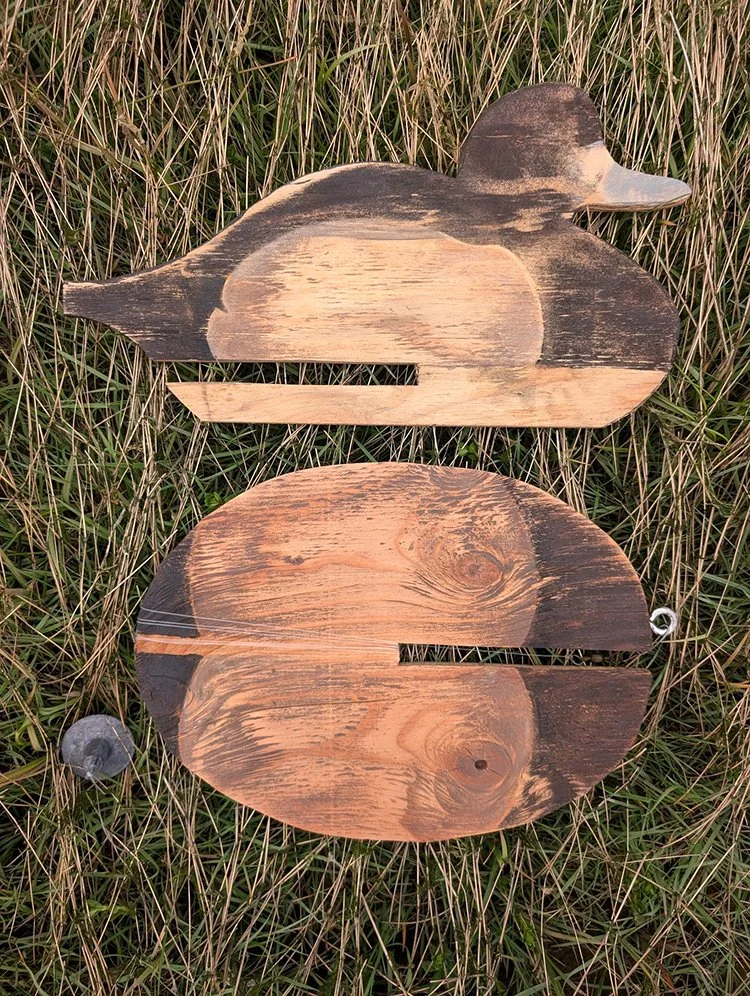
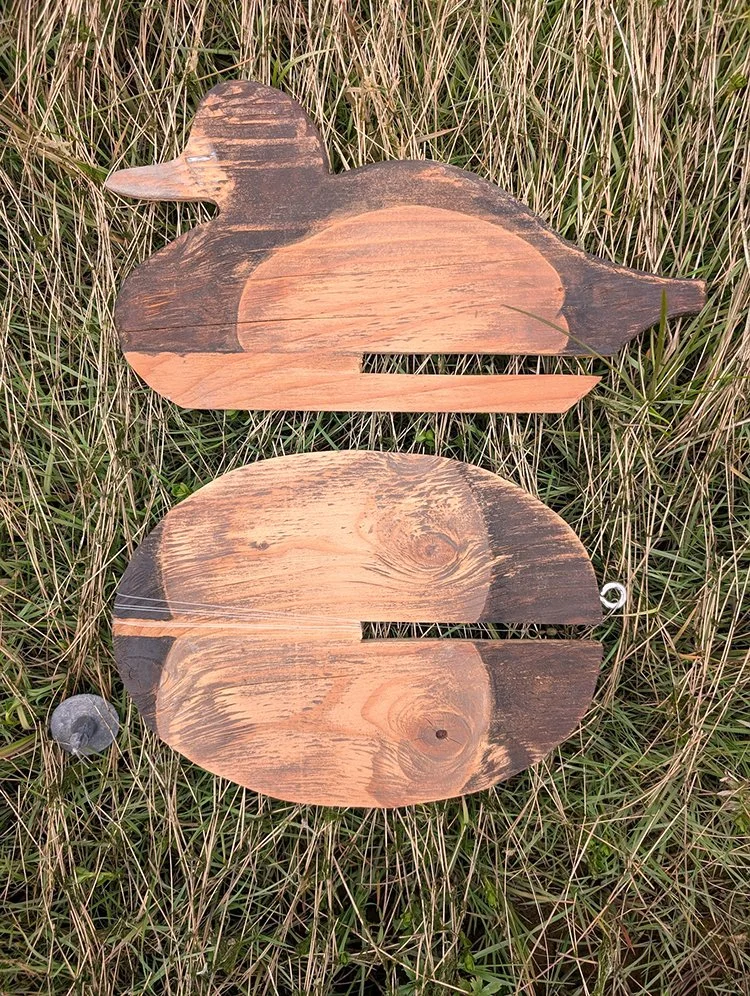
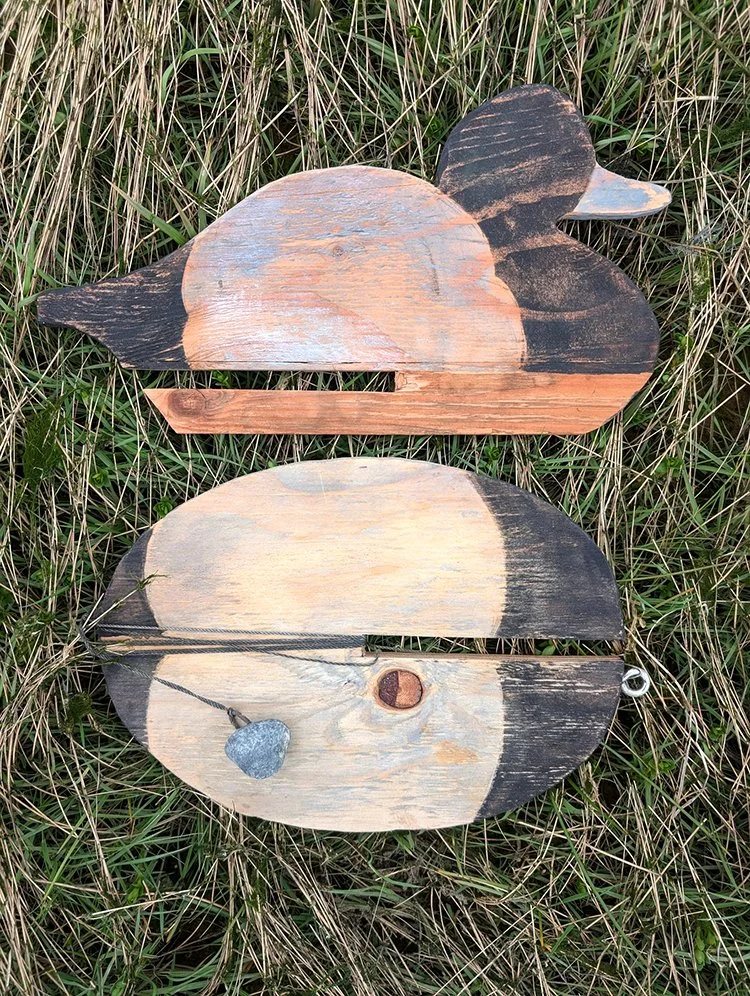
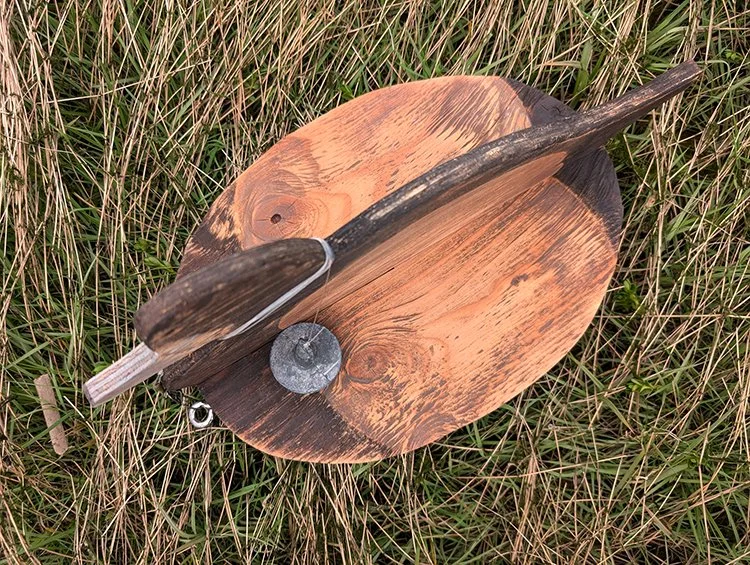
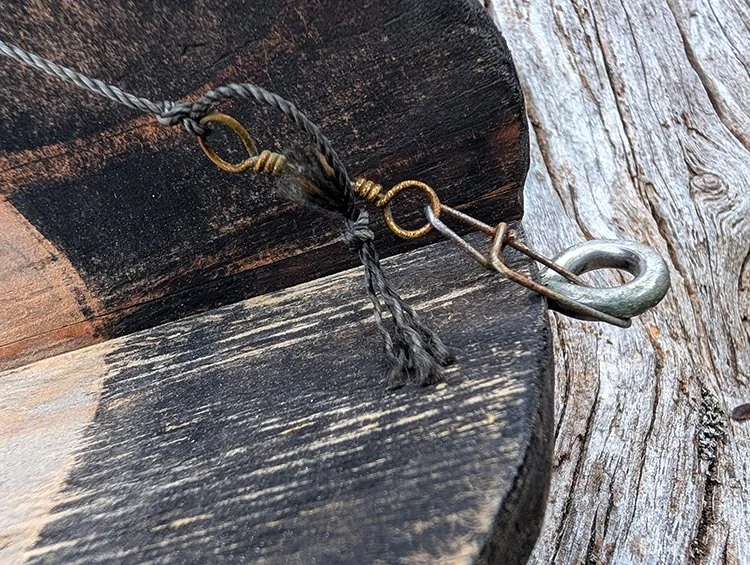
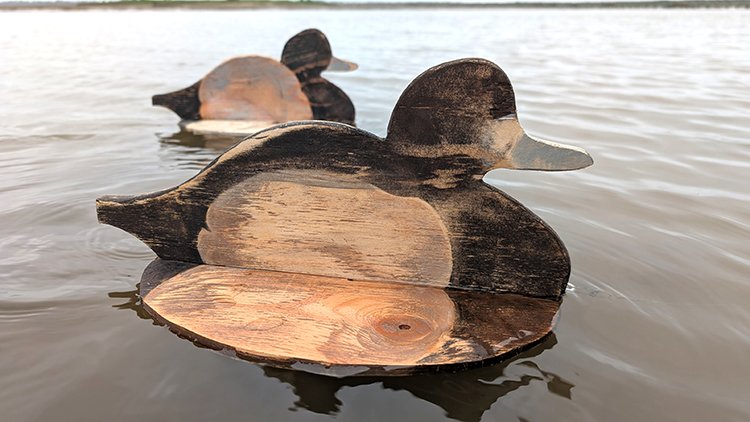
I made this pair of bluebills wanting to mimic a pair of nineteenth century working birds. The hardware is rusted, and the drake’s waxed line is faded, broken and has been retied, the hen’s line has been replaced by a stiff monofilament, both being tied to 6-ounce lead mushroom anchors for mooring in soft mud.
Each measure 14” from tail to breast, 16” wide and 7 ¼ inches from the top of the head to the bottom.
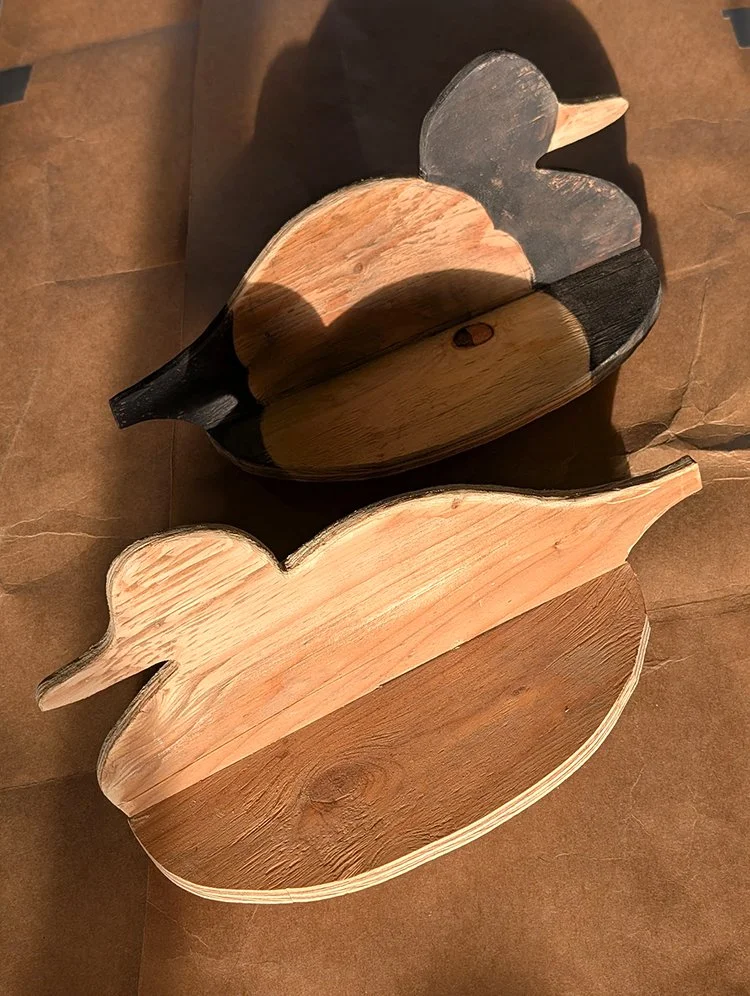
In Progress
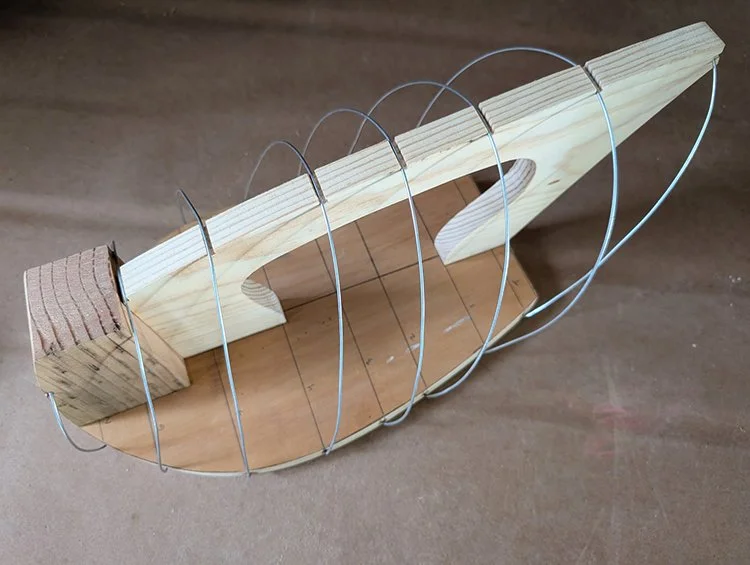
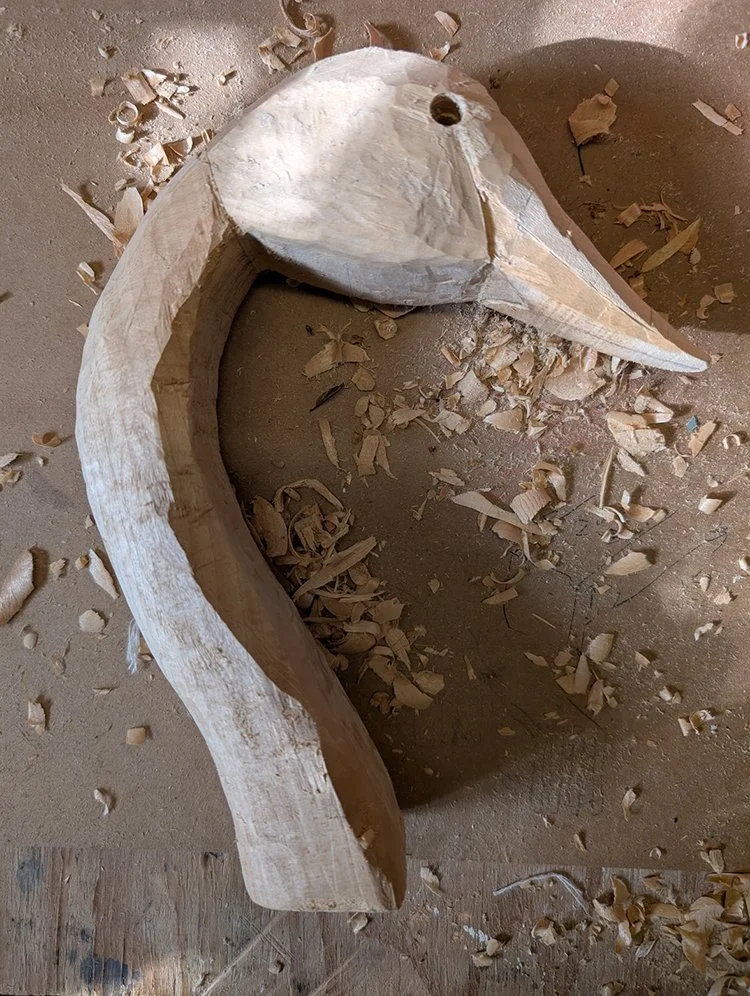
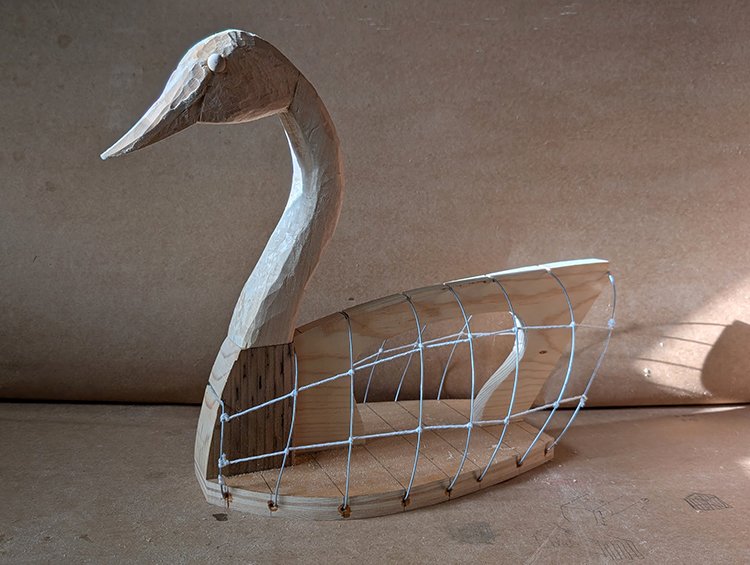
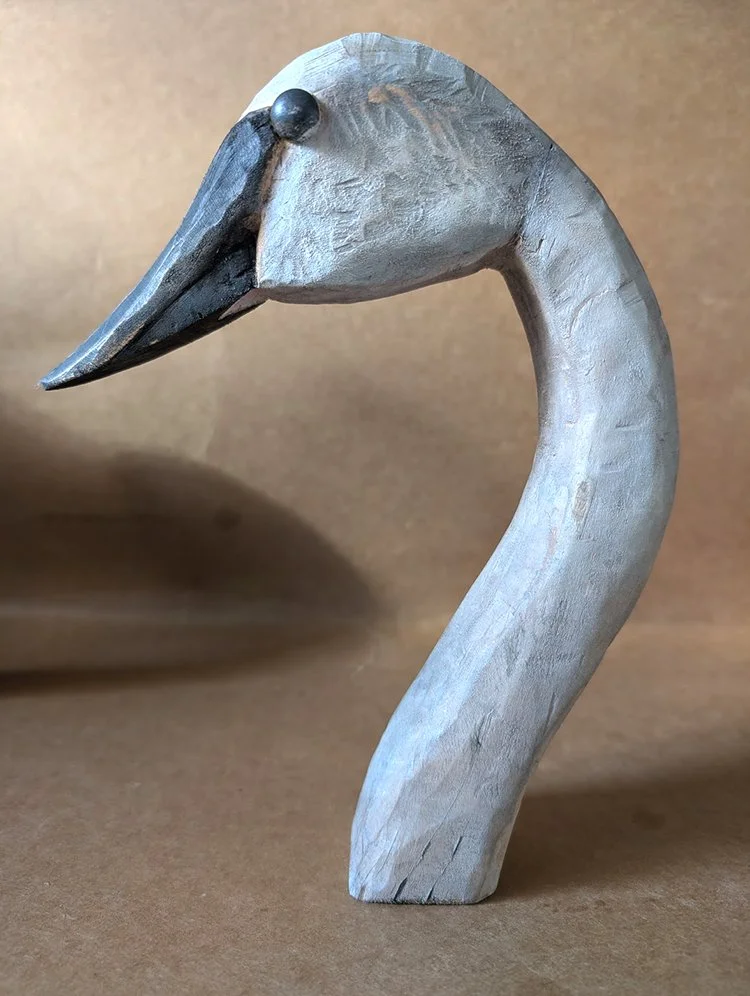
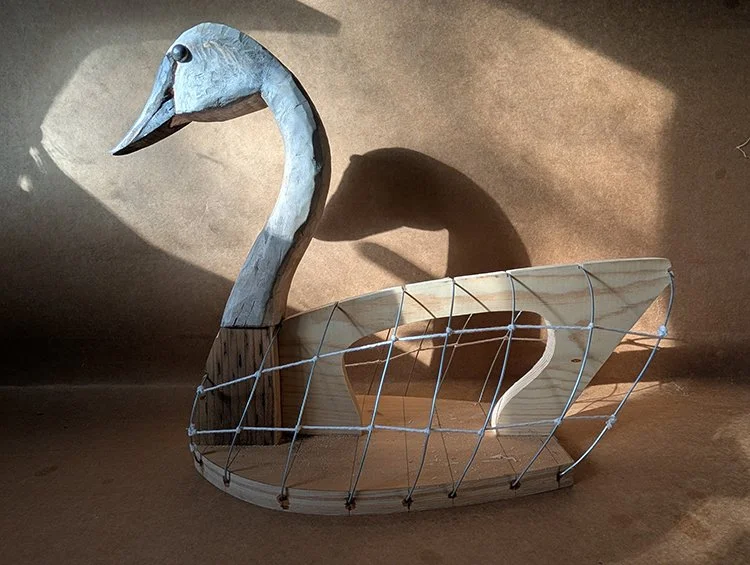
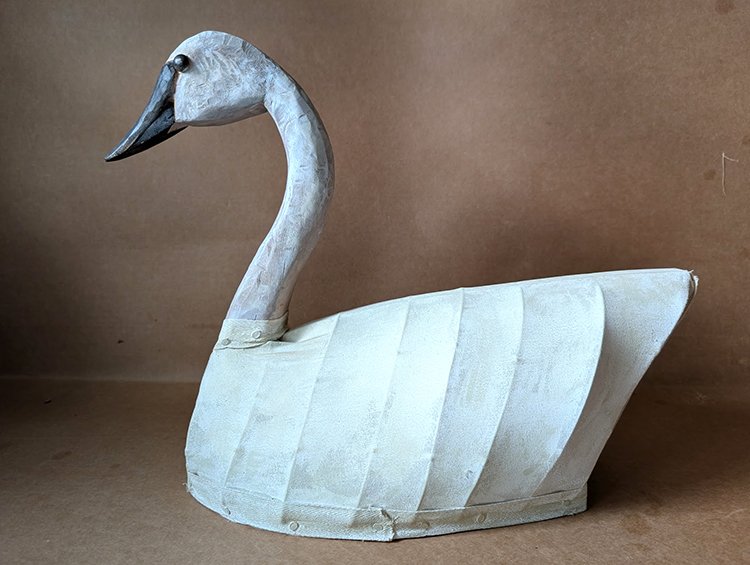
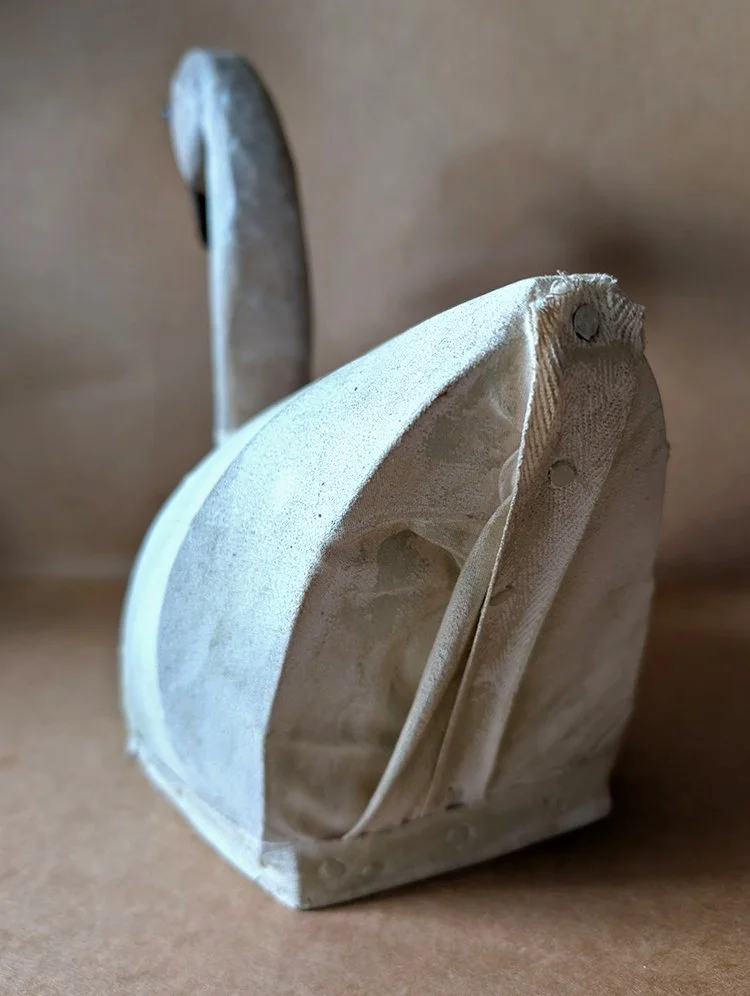
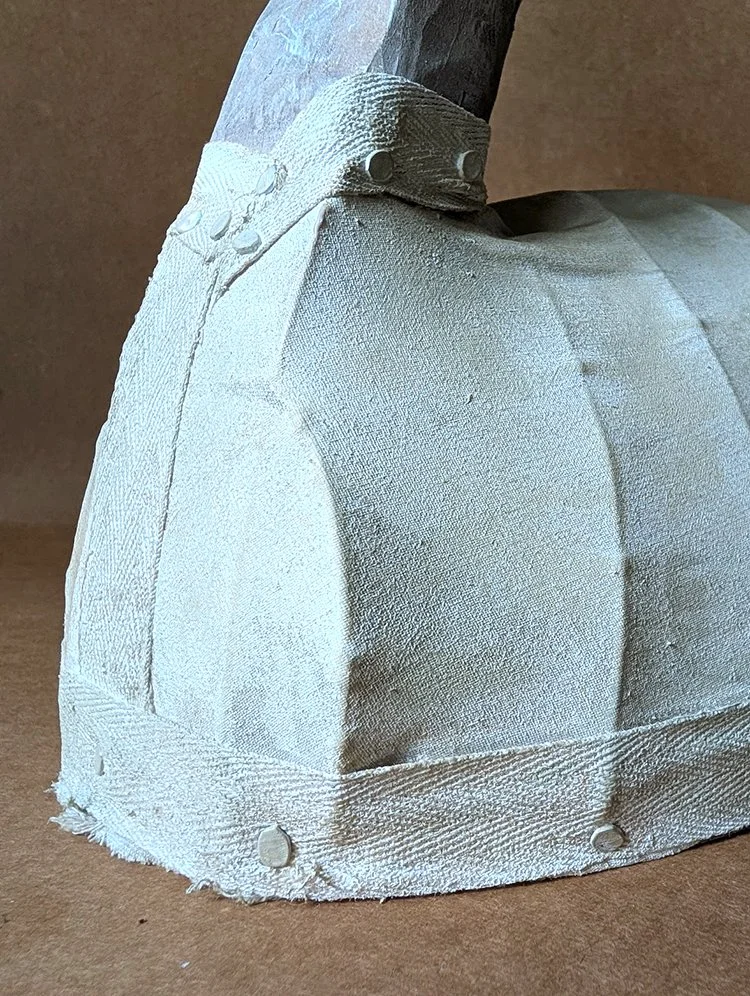
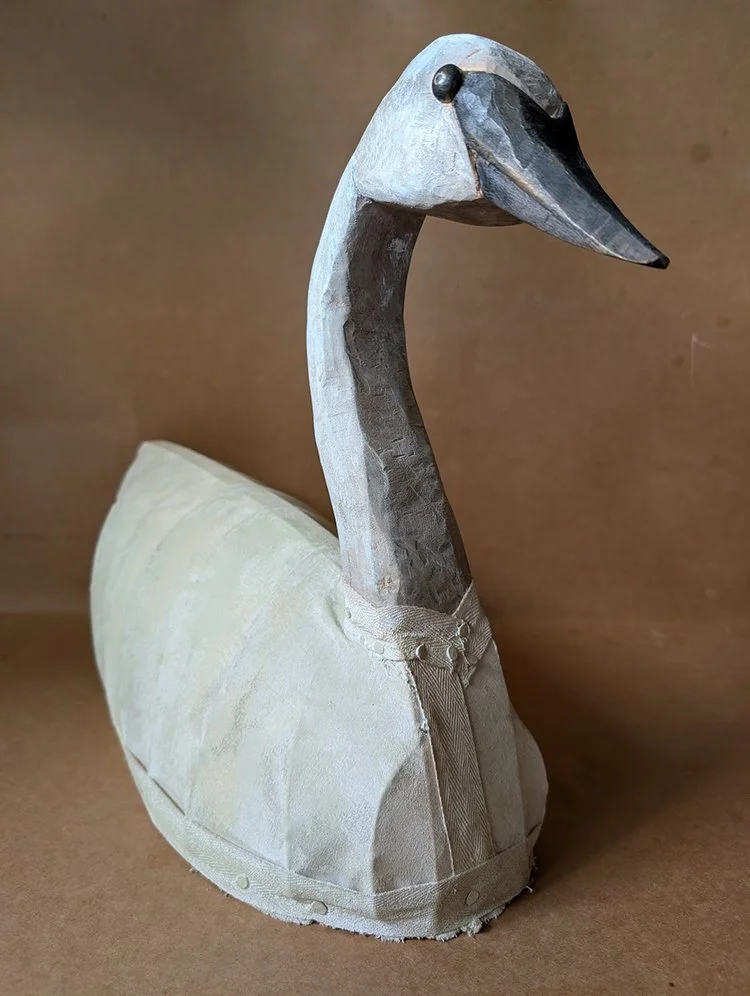
A wood, wire, and cloth swan I have made to imitate a popular decoy design used by market hunters in the late 1800’s around the Eastern Shore of Virginia and the Carolinas.
Due to the scarcity of carving wood, creative waterfowl hunters resorted to the use of wire, sail cloth and a small amount of wood to fool great numbers of birds over the Atlantic Flyway.
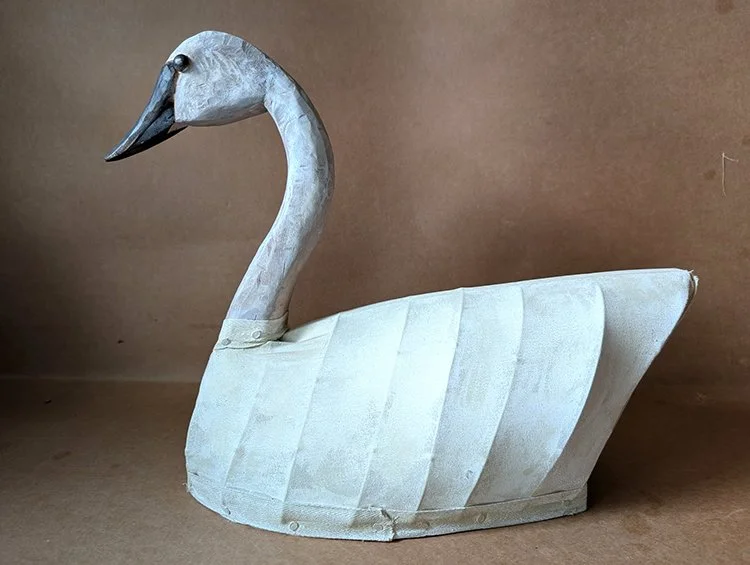
Whistling Swan
Materials - Basswood, Wire, Muslin, Acrylic Paint, Carpet Tacks, Cotton Trim Tape, Fluted Wooden Dowel, Staples, Button Top Hole Plugs
Measurements - 15” Long, 7.5” Wide, 7” High at Tail, 14.5” High at Head
References
Hillman, Anthony. Carving Classic Swan and Goose Decoys. Toronto, Ontario: General Publishing, 1987.
Streetman, Al. 10 Wire & Canvas Decoy Patterns For Carvers. Atglen, PA: Schiffer Publishing Ltd, 2000.
My first attempt at a two sided, full body cast of a chinook salmon jack. The molding went well, but it completely fell apart during the casting process. For whatever reason the two halves did not bond. I am not sure if it was due to the sloppy shelf or inadequate curing time. However, the mouth plug and fins did come out well, and I consider that a small success.
A handsome coho salmon I molded, then cast in resin. The eyes were set, and after minor sculpting, it was painted with an airbrush using acrylic paints, opaque and iridescent. I colored it as it would look migrating from the vast salt ocean to its final destination in a small coastal stream.

A plaster cast of my first bluebill. A drake I killed (and later ate, gizzard, heart and all). Taken near the Columbia River.
Borax + water and a lot of drying time yields a pretty nice, do it yourself head mount with a lot of personality. Another nice ling out of Depot Bay, Oregon.


Images on Polaroid film.
Sketch for my acrylic painting, Mojarra Negra.


Pencil on Newsprint

Acrylic on Wood 5” X 7”
I caught this small Starry Flounder while Surfperch fishing. It was hooked deep and wouldn’t have survived if I had released it, so I decided to keep it and make a half cast for reference.

Cleaned and dried.

Placed in bedding material to midline.

Plaster negative dried and sealed.


Resin positive.
Towards the end of last duck season I shot a very nice Hooded Merganser drake. I made made an alginate mold and poured plaster. The result was a finely detailed, beautiful cast, cleaned up, primed and antiqued with oil paint.


I started this painting of a drake Harlequin Duck that I abandoned because it wasn’t coming together as I had hoped. I still like the ducks gesture, and maybe one day I’ll give it another go.

Underdrawing
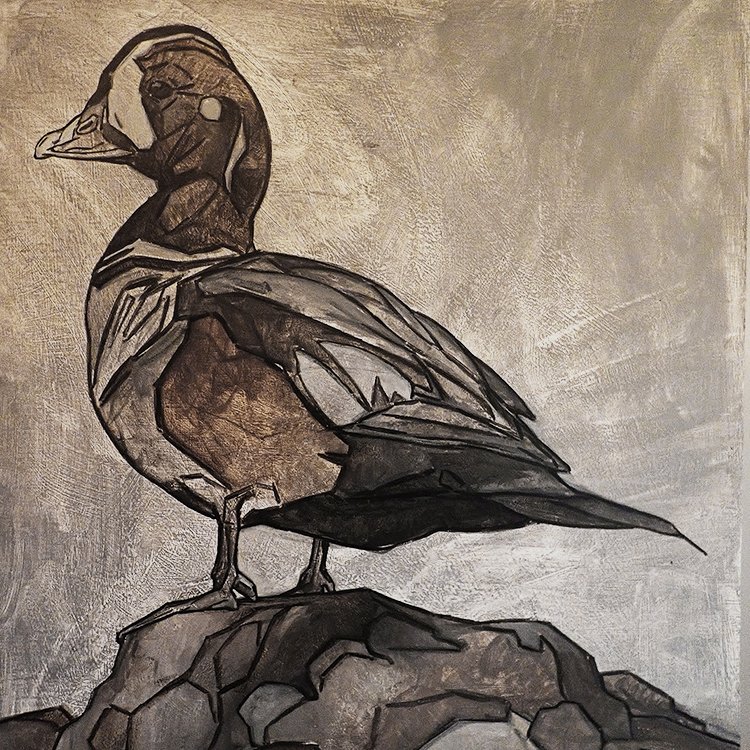
Underpainting

A uniquely handsome bird, the Harlequin duck is found along the rocky shores and crashing waves of both N. American coasts.
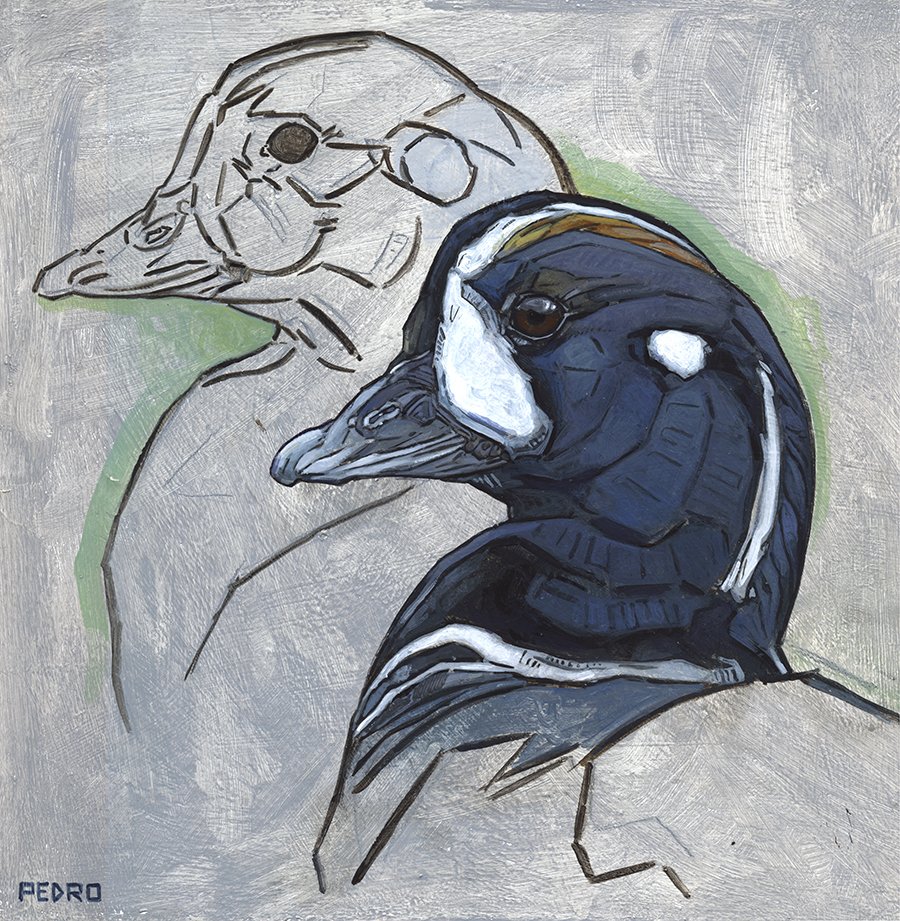
Acrylic on Panel
10” X 10”

Sketch
Logo commissioned by the Oregon Chapter of the American Fisheries Society for their 2019 Annual Meeting in Bend, Oregon.

12” X 12”
Acrylic on Illustration Board

Vignette

Detail
A pair of paintings for the same client.

Bull Reticulated Giraffe
8”X10”
Acrylic on Panel
Reference - Desi, a 10’ male giraffe living at the Oregon Zoo
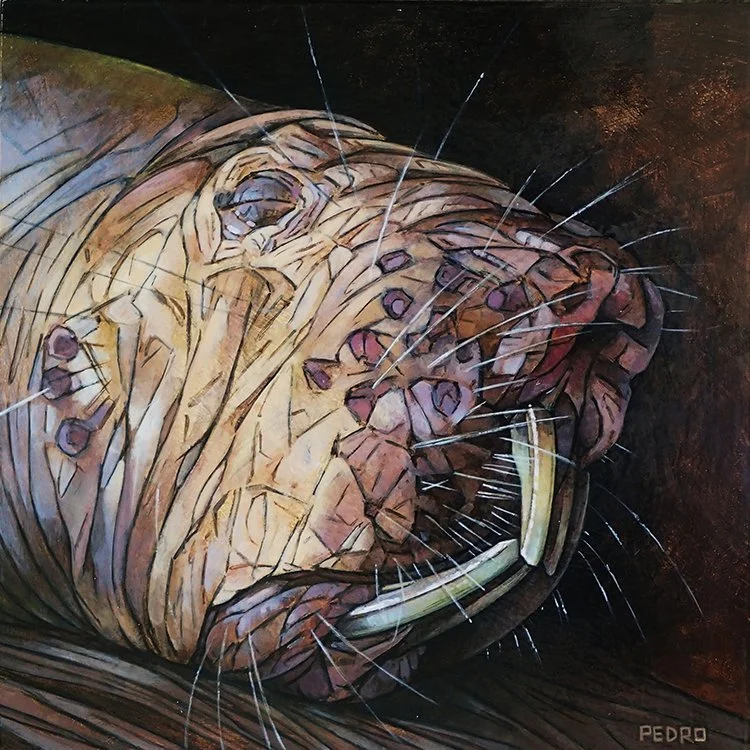
Naked Mole Rat
10” X 10”
Acrylic on Panel
Reference - Naked mole rat’s at the Oregon Zoo.
Carefully bred spotted horses called Appaloosas were named after the Palouse River that runs through the traditional land of the Nez Perce.
8” X 10” Acrylic on Panel

Prints of one of my most popular paintings, True Native has been restocked. Now available as an 8” X 10” high quality print on an 11” X 14” sheet of semi gloss paper. Click image below to purchase.
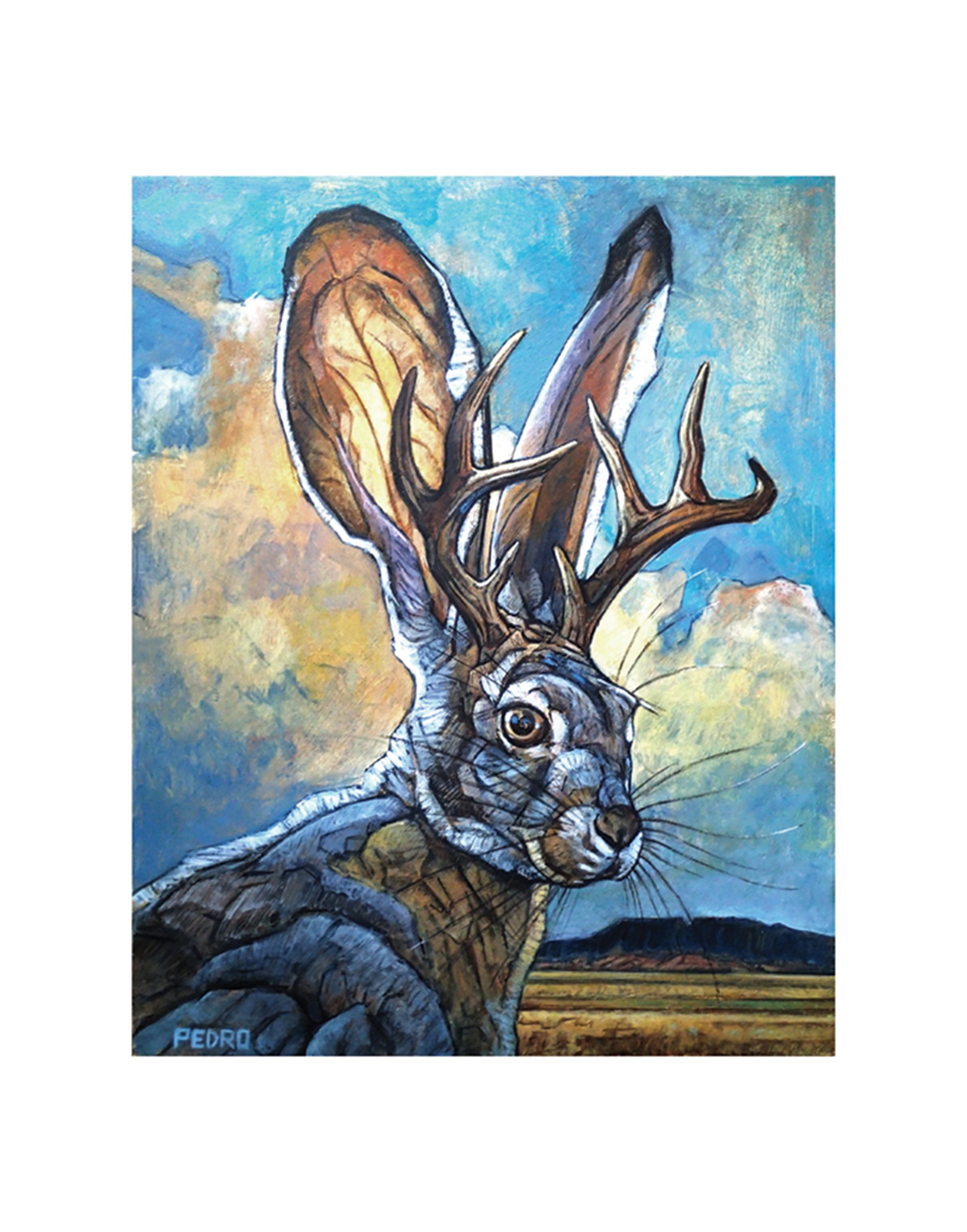
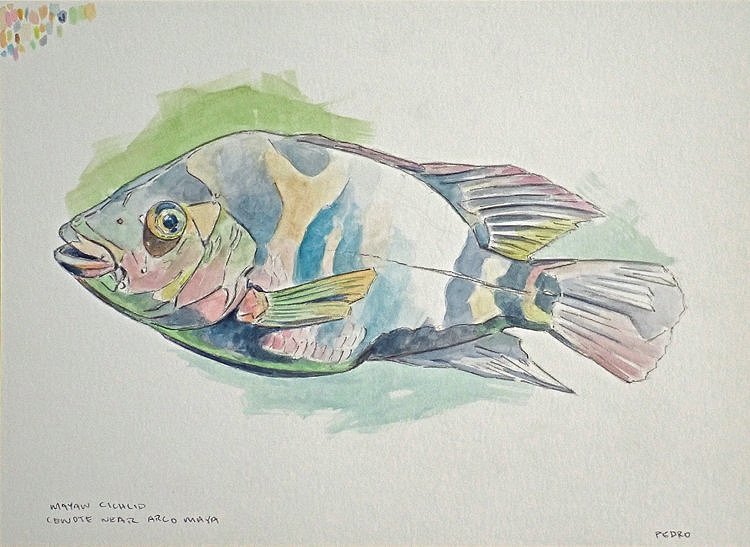
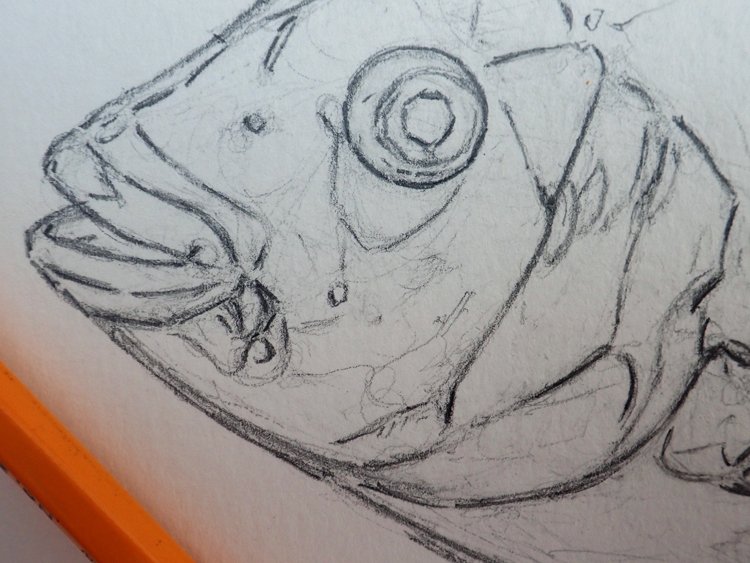
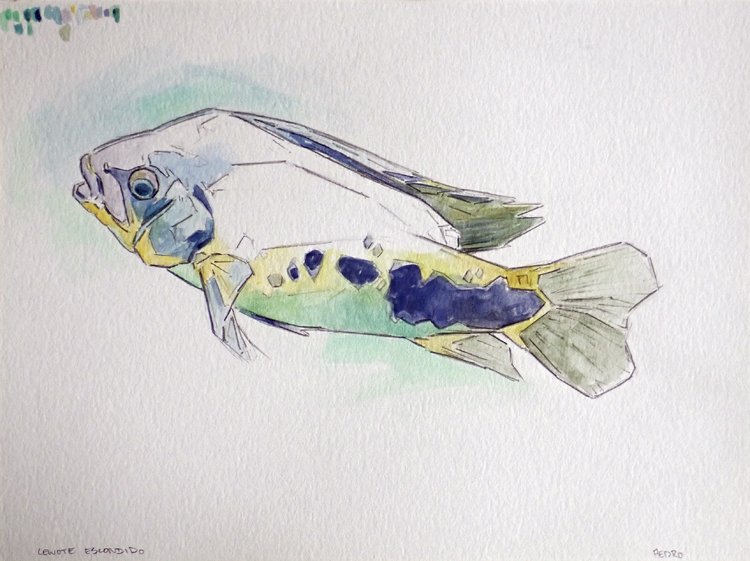
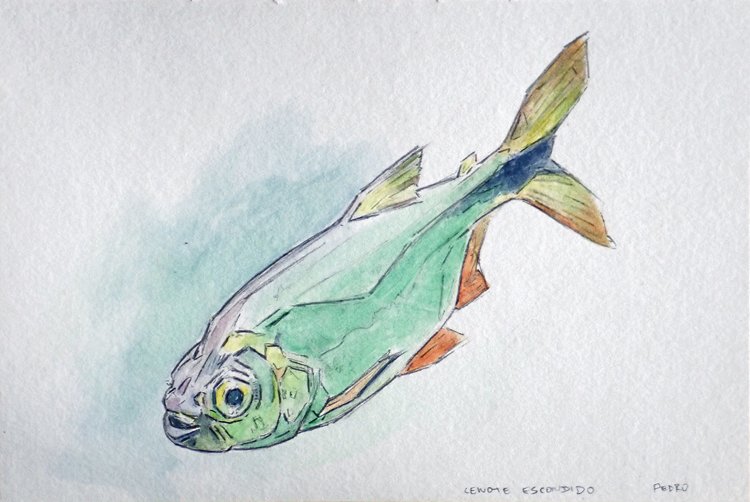
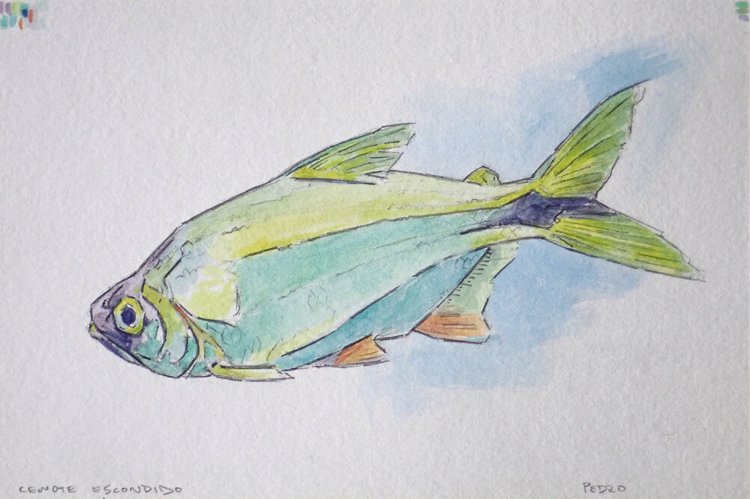
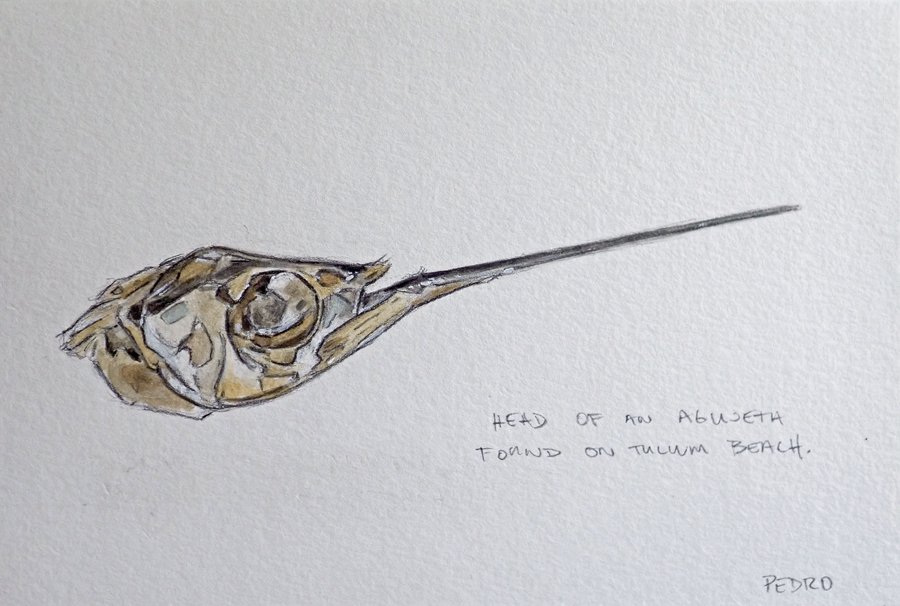
A selection of watercolors from my artists residency in Mexico.