studies

Elk Quarter

Aside from cooking, growing a garden, making art, and being in love, hunting wild animals is one of the realest things you are still allowed to do as a human.

Butchering or breaking an animal down into muscle groups for food feels almost intuitive. I feel like I’m living in the present. and 100,000 years ago at the same time.  

Whatever the pursuit, going into an animal’s habitat to kill it is hard, it’s cold, its wet, its uncomfortable, it’s emotional, it’s physically and mentally draining. Your limited by time, season, daylight, weather and tide. Success is rare.

So why?

I respect artists and writers who have put in the work to learn the animals they make art about inside and out, and I strive to do the same. I like knowing where my food comes from, I like the connection between my meal and the experience. I want to be a part of the food web, I don’t want to pay someone to do the dirty work for me.
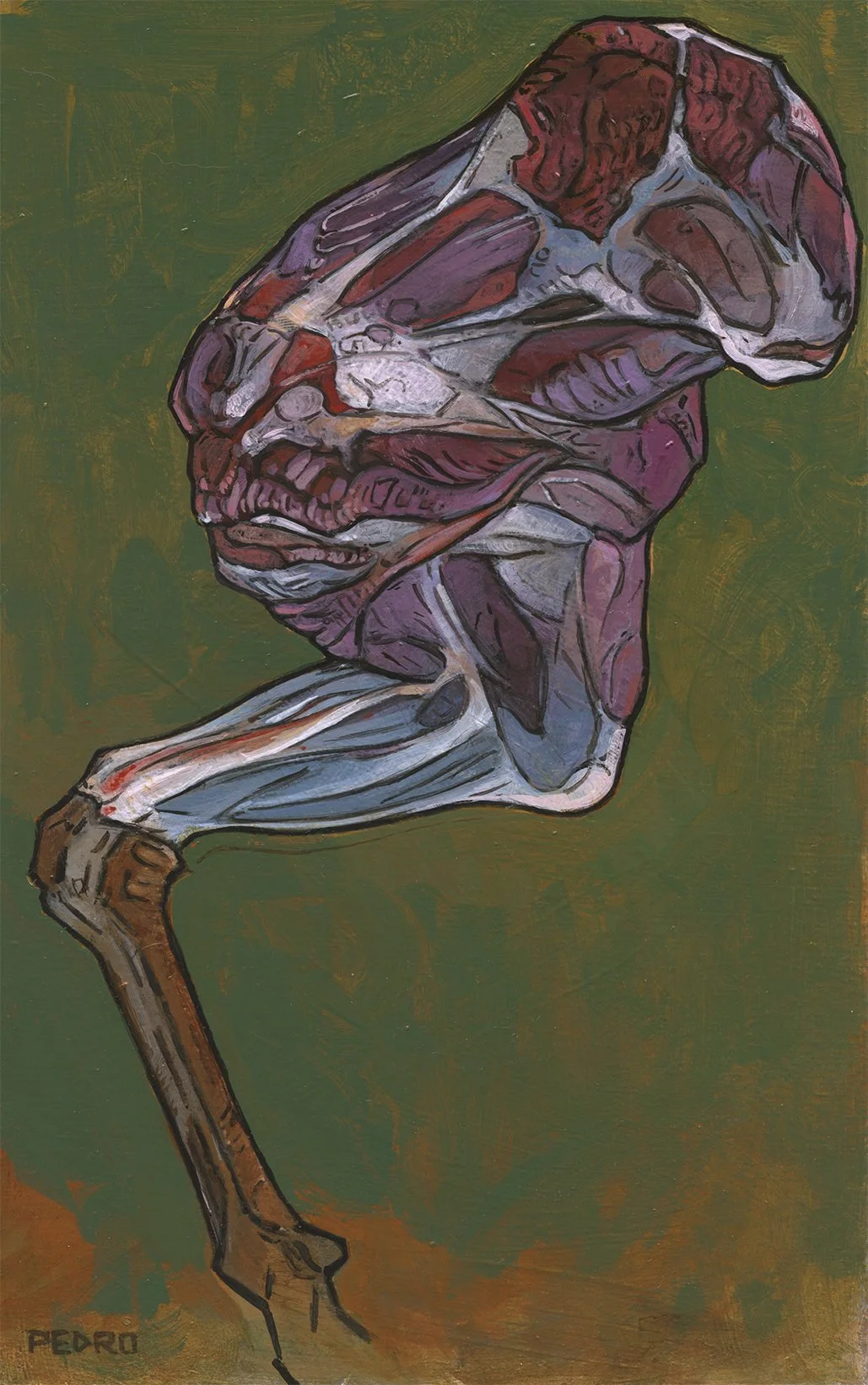
Elk Quarter

7” X 11”

Acrylic on Wood Panel
New Painting - Saiga Antelope

Saiga Antelope for Jaimie

A strange and wonderful animal for my lady.

16” X 11”

Acrylic on Panel

detail

progress

New Painting - Sand Shrimp

These creeps have been burrowing through mud flats since the supercontinent Pangea began breaking apart, and the first flowers bloomed. I can find living ones and fossilized ones within 20 miles of each other.

Mud, or sand shrimps are widely regarded as a supurb fishing bait for salmon, steelhead, and sturgeon. A nightmare to keep on a hook, use an egg loop, Miracle Thread or a similar elastic thread.

My reference specimens were dug near Seaside, Oregon, taken home and photographed.

FOR SALE

9” X 14” Acrylic on Panel

Detail

Above: A Freshly dug, live shrimp, I pumped fresh from a mudflat.

Opposite: Claw parts; carpus, propodus, fixed finger and dactylus of a fossilized shrimp I found along the Columbia River.

Shrimp anatomy and natural history reference - https://depositsmag.com/2017/07/04/the-abundant-yet-understudied-fossil-record-of-ghost-shrimps/

Molding and Casting a Starry Flounder for Reference

I caught this small Starry Flounder while Surfperch fishing. It was hooked deep and wouldn’t have survived if I had released it, so I decided to keep it and make a half cast for reference.

Cleaned and dried.

Placed in bedding material to midline.

Plaster negative dried and sealed.

Resin positive.