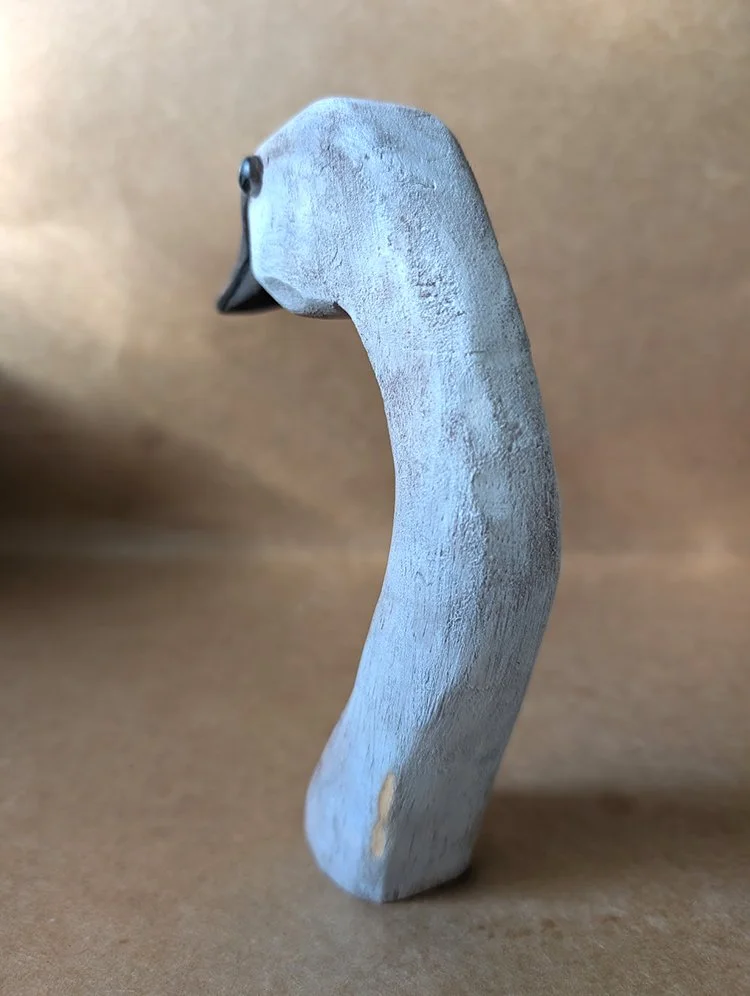
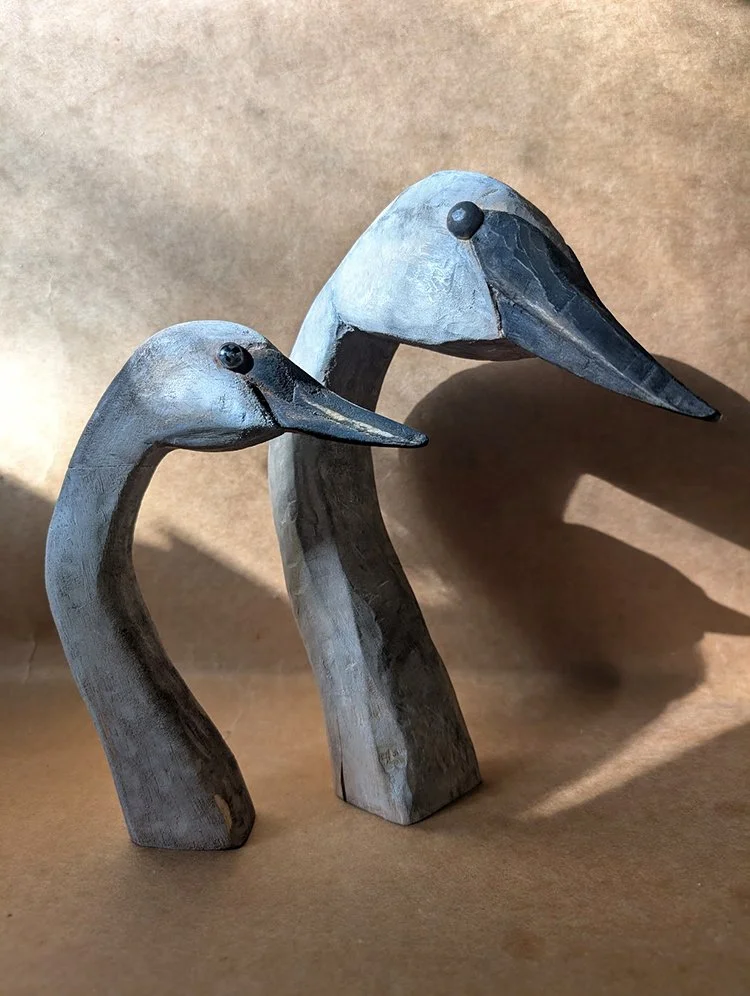
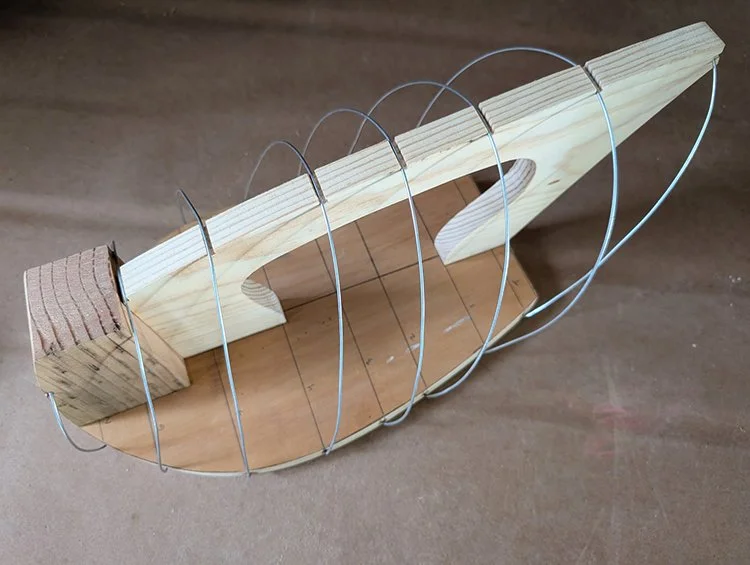
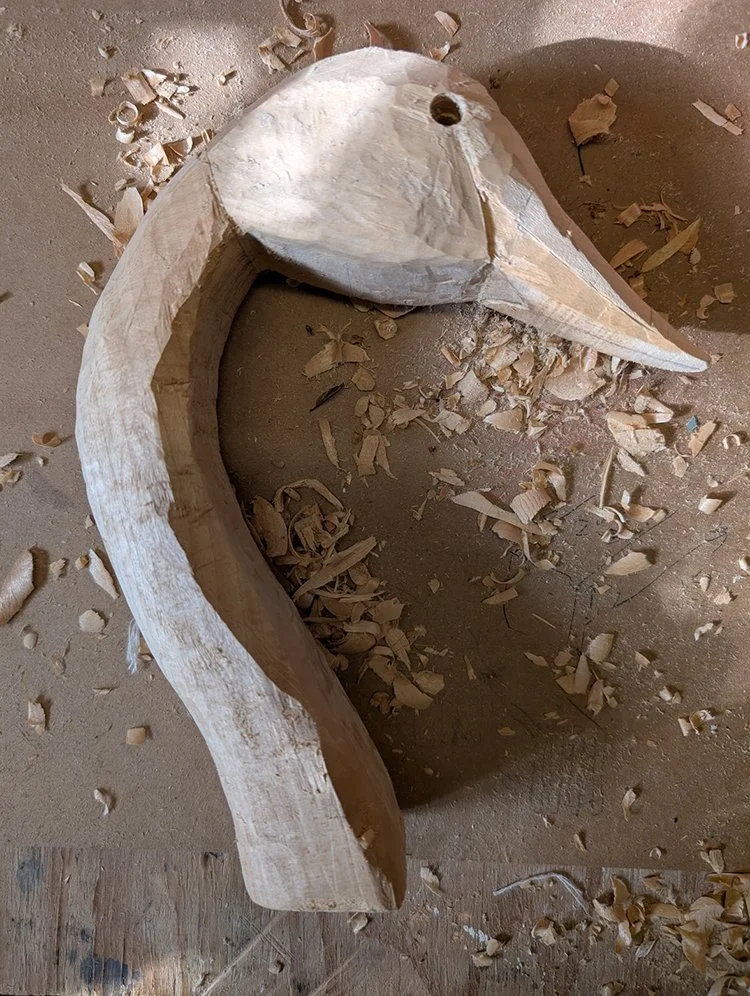
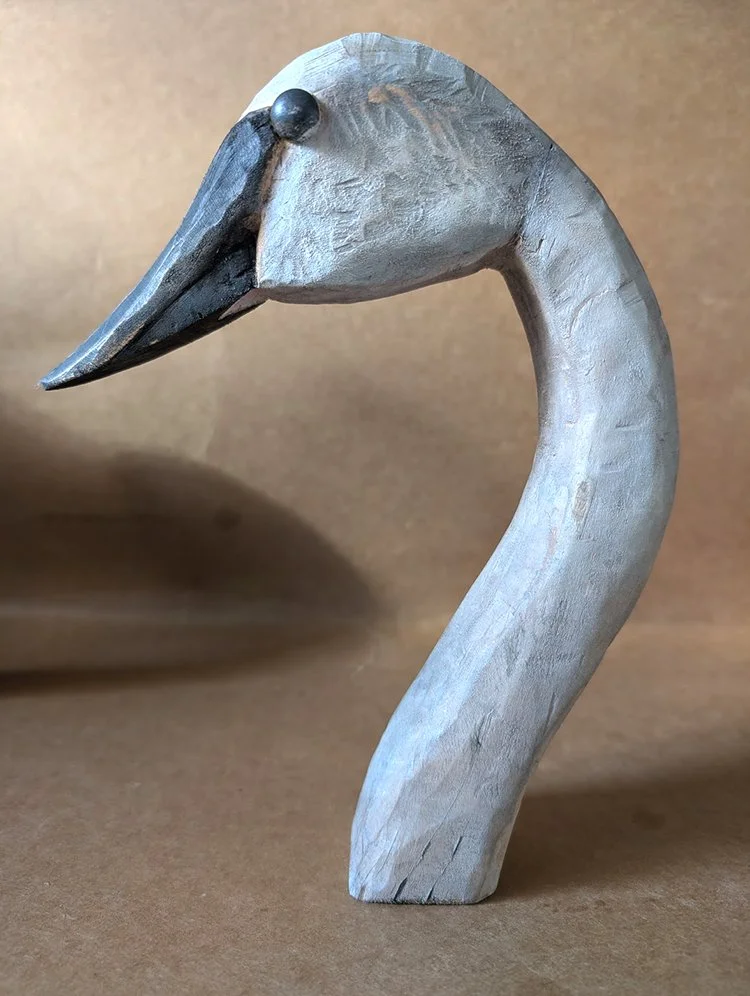
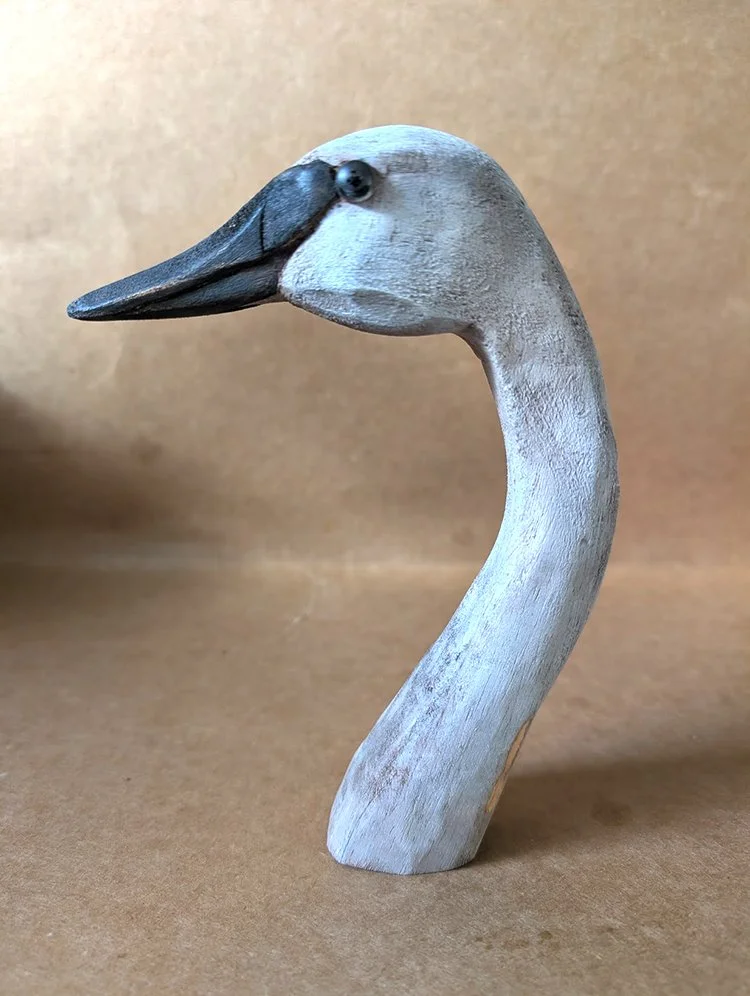
A small swan head carved from soft balsa wood with glass eyes and painted with acrylics, a model for the previously shared wood and wire swan decoy.
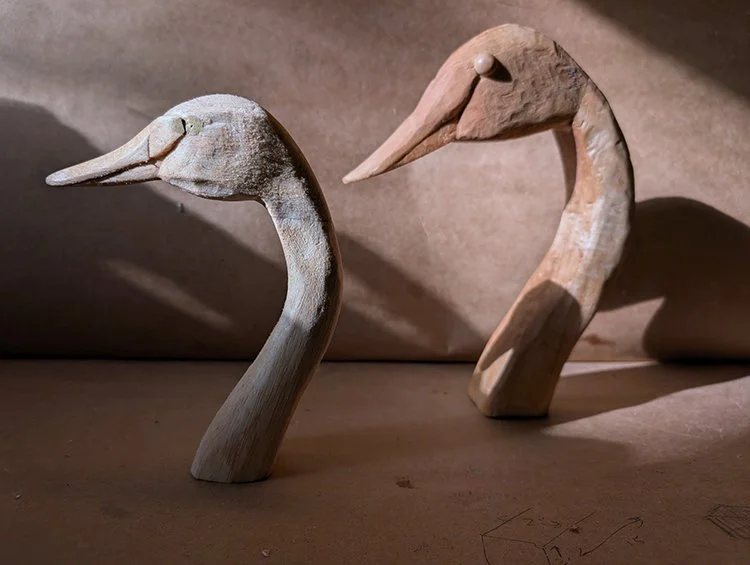
A size comparison.
A small swan head carved from soft balsa wood with glass eyes and painted with acrylics, a model for the previously shared wood and wire swan decoy.
A size comparison.
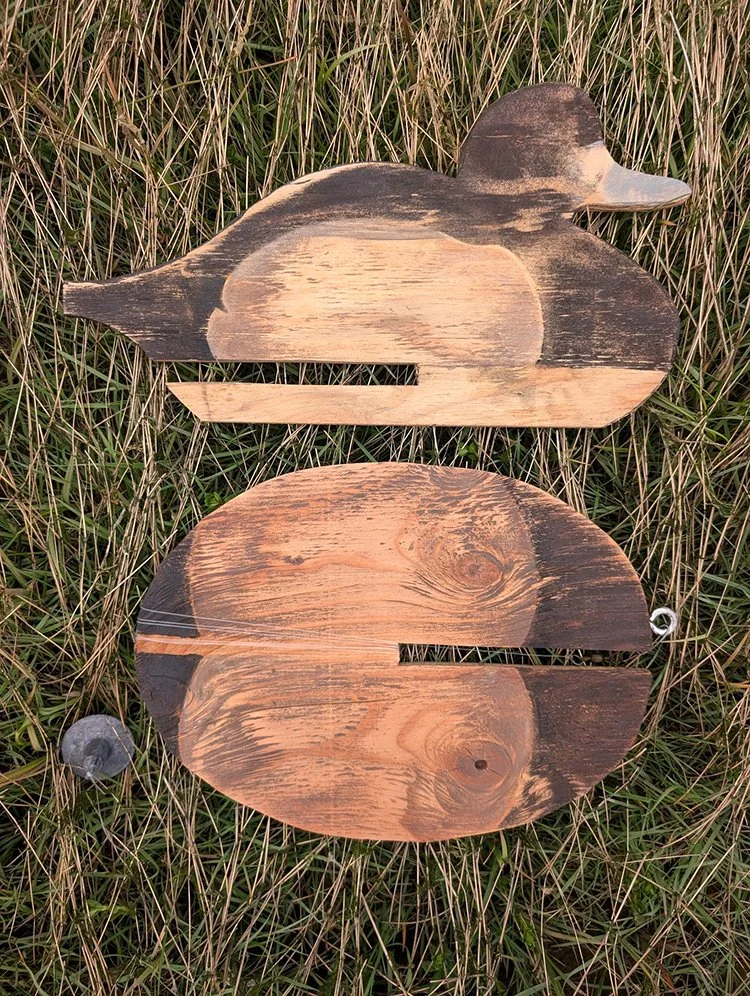
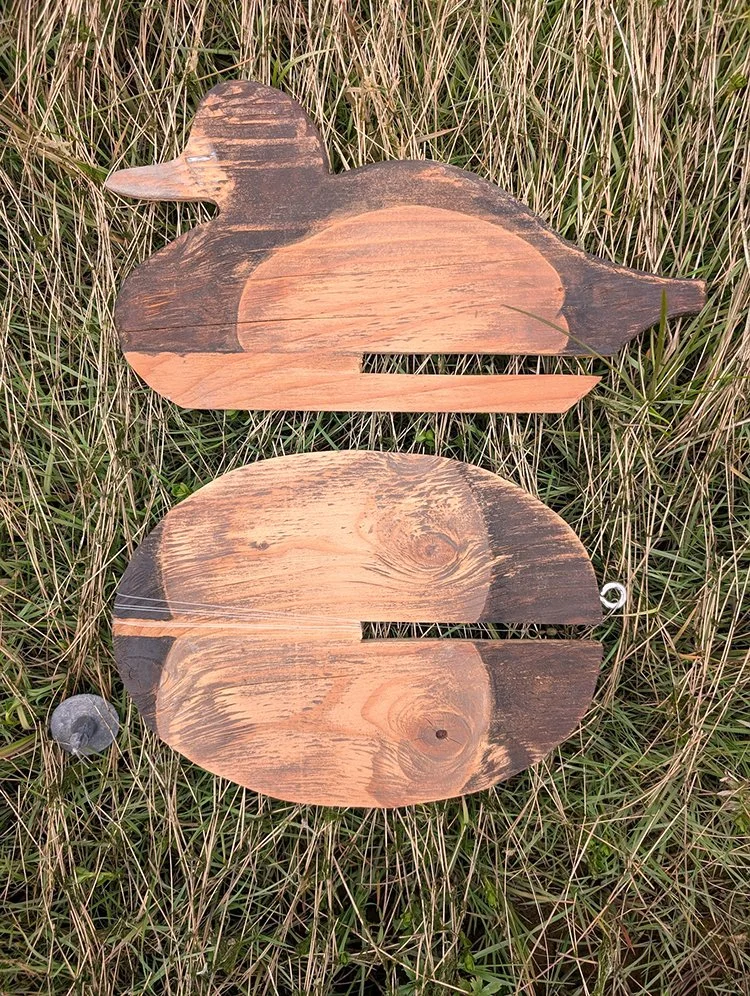
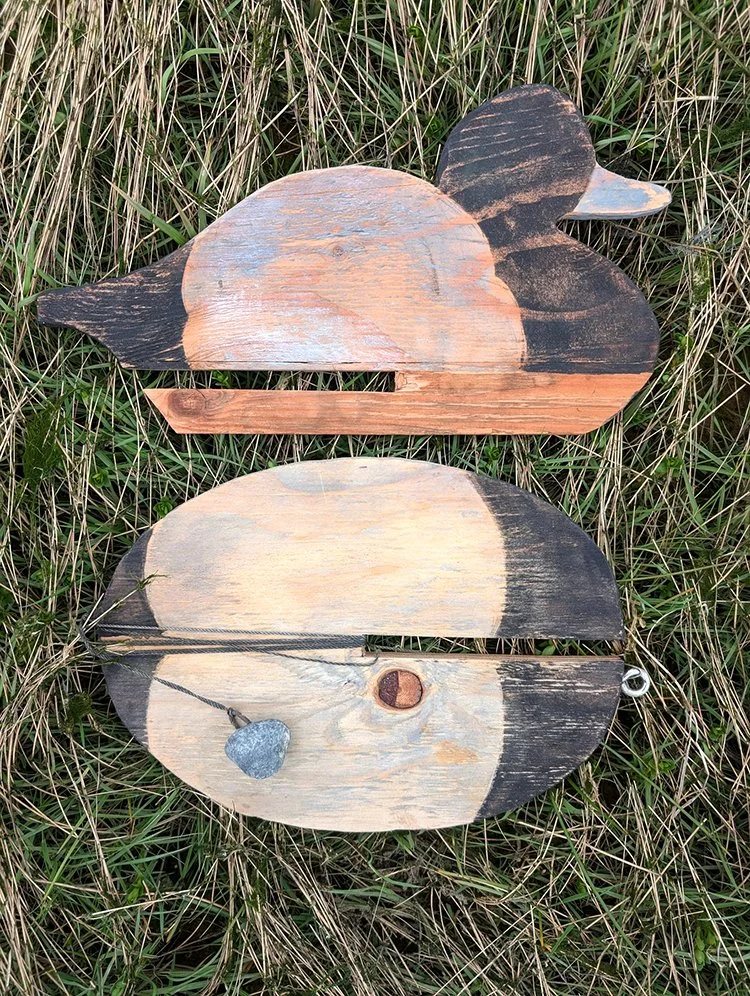
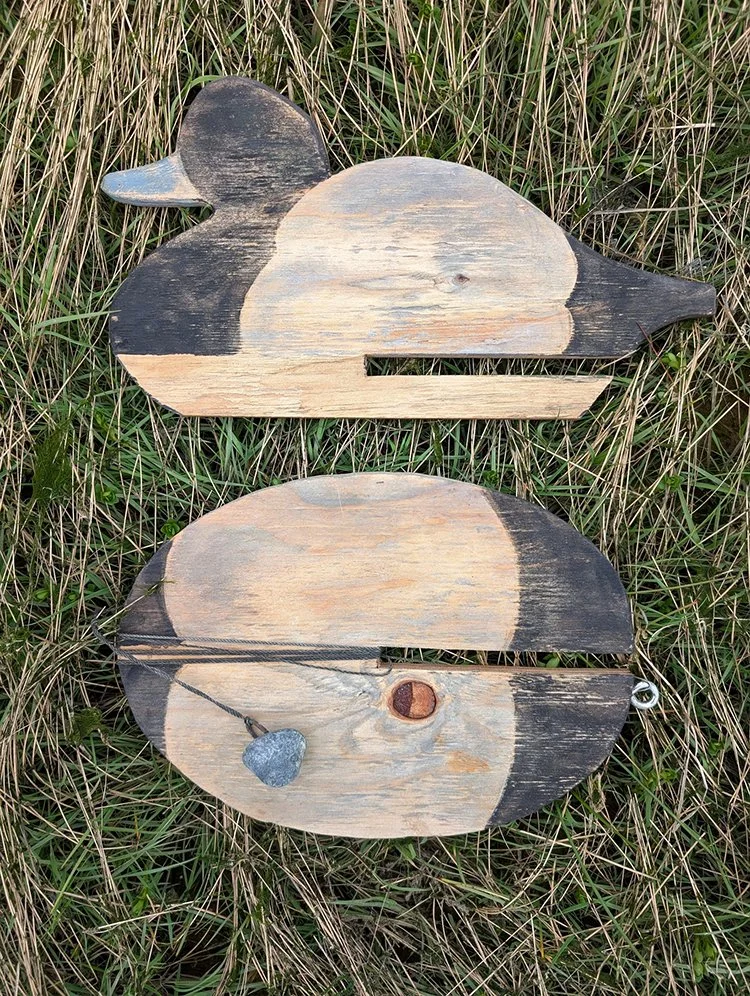
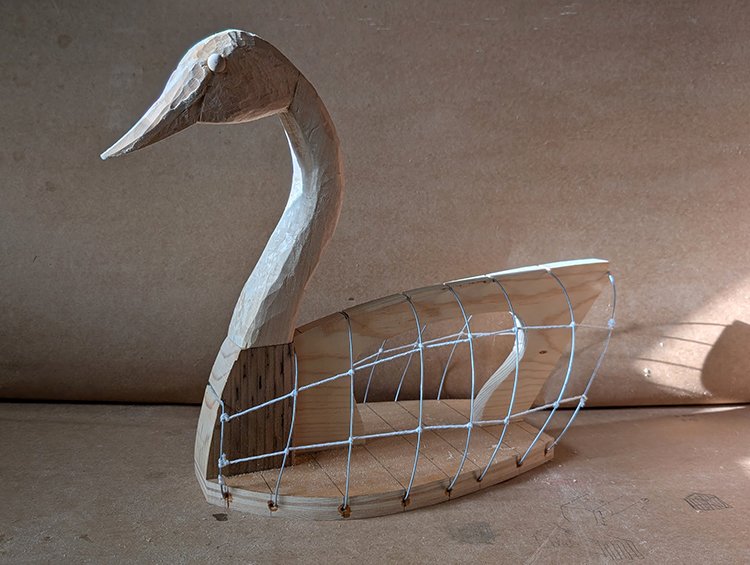
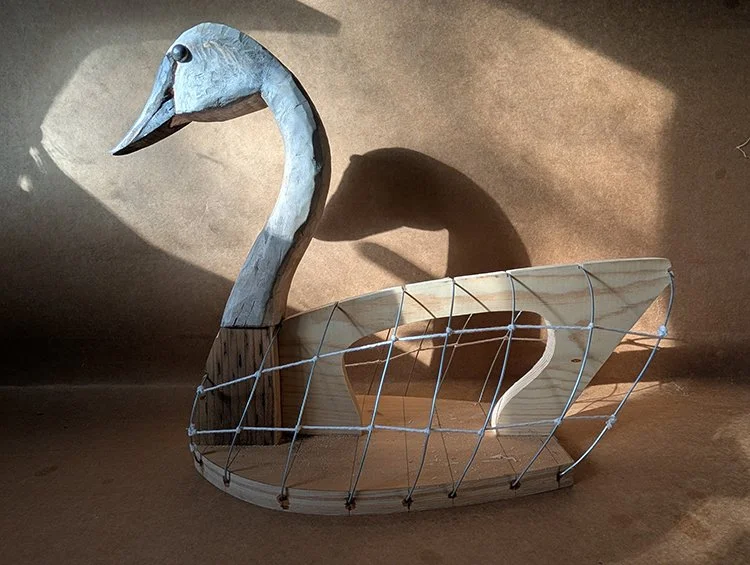
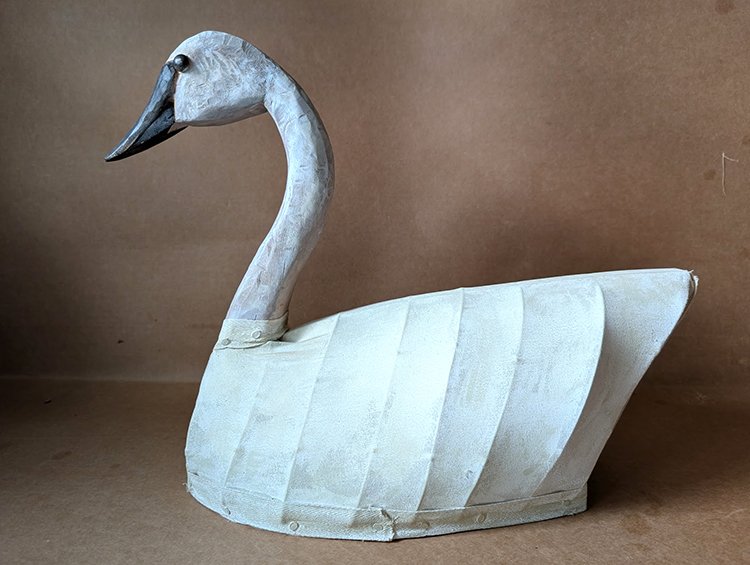
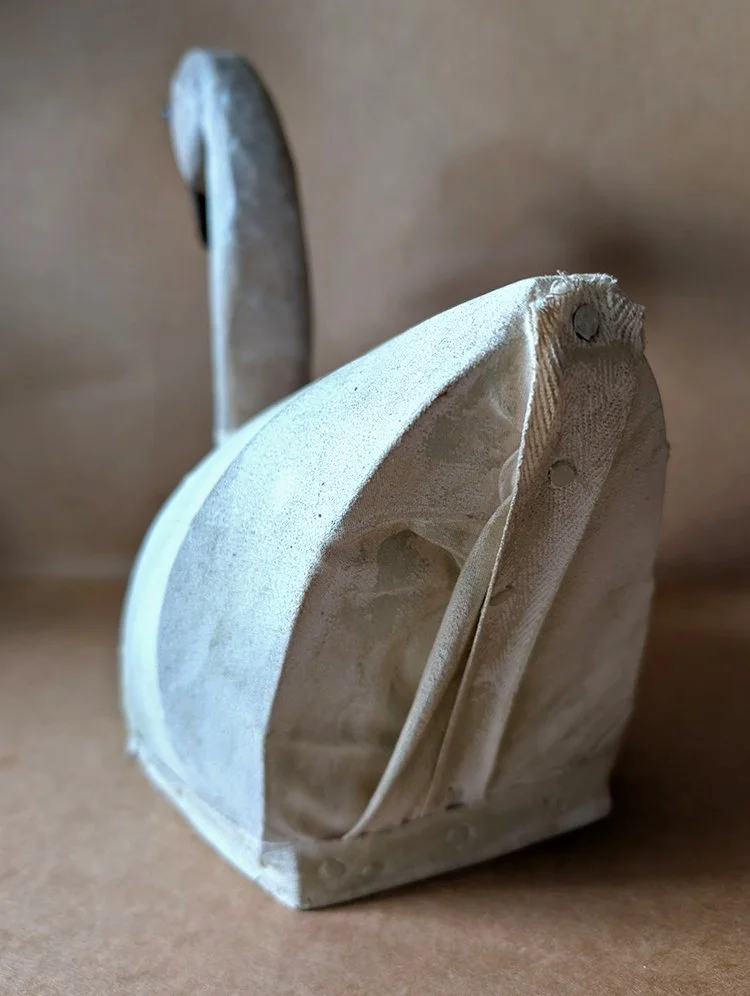
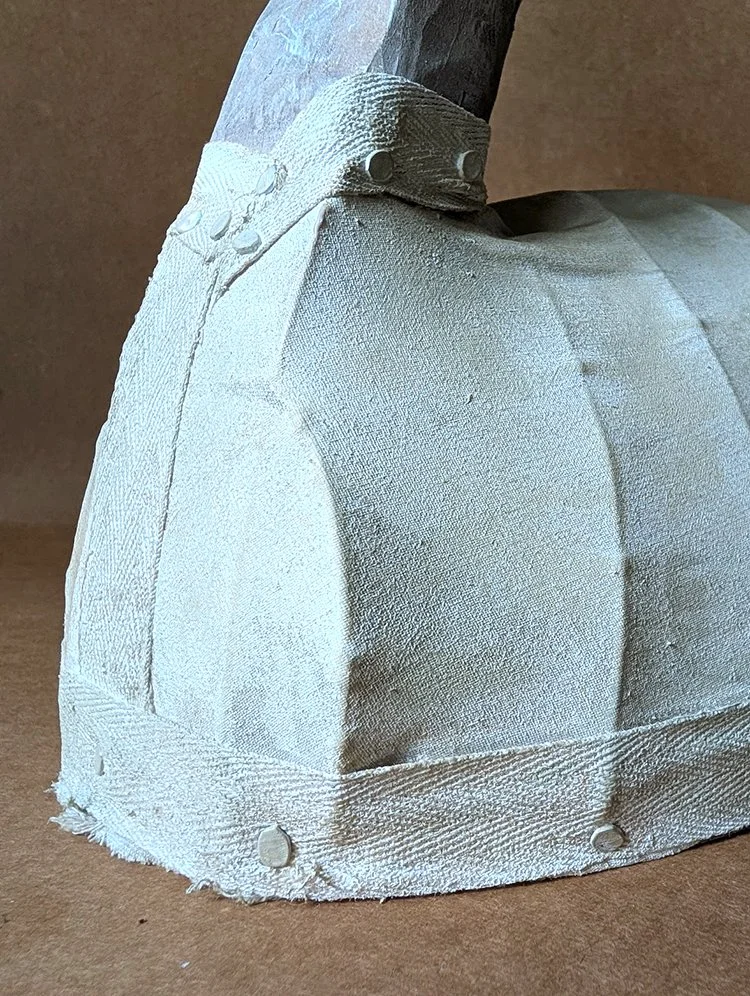
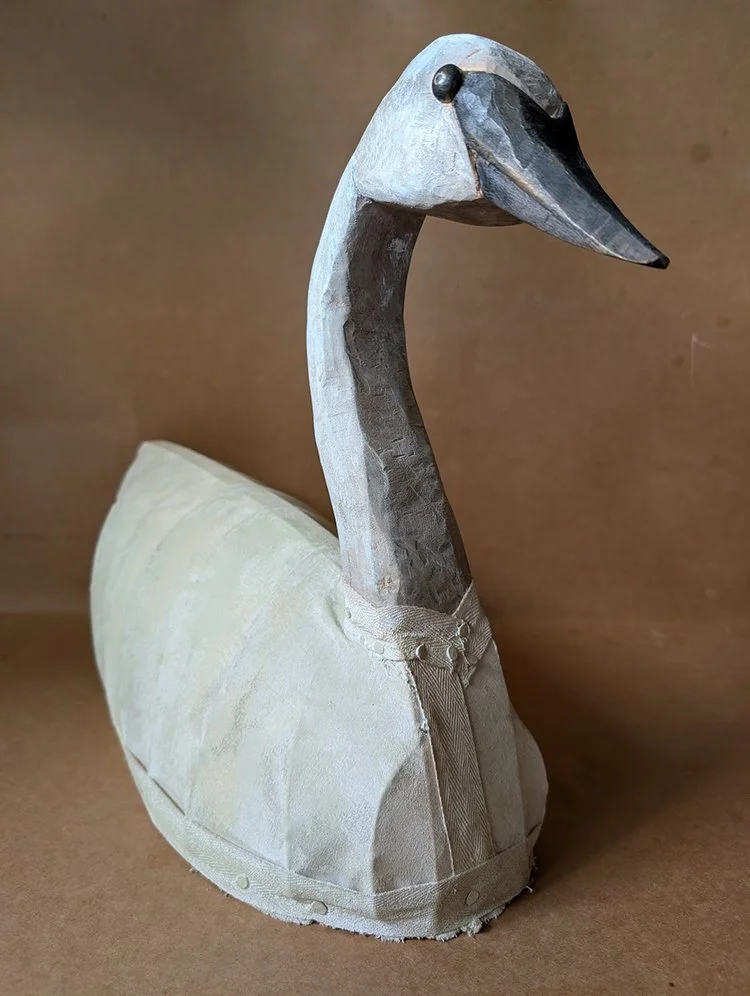
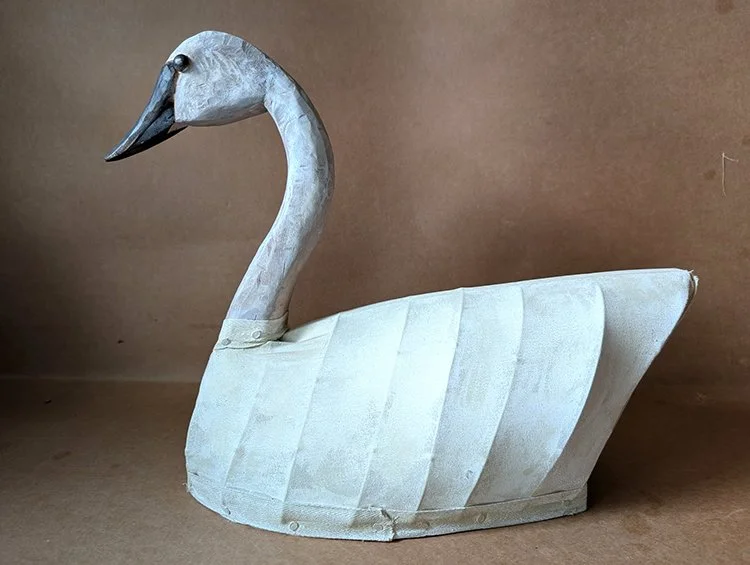
A wood, wire, and cloth swan I have made to imitate a popular decoy design used by market hunters in the late 1800’s around the Eastern Shore of Virginia and the Carolinas.
Due to the scarcity of carving wood, creative waterfowl hunters resorted to the use of wire, sail cloth and a small amount of wood to fool great numbers of birds over the Atlantic Flyway.
Whistling Swan
Materials - Basswood, Wire, Muslin, Acrylic Paint, Carpet Tacks, Cotton Trim Tape, Fluted Wooden Dowel, Staples, Button Top Hole Plugs
Measurements - 15” Long, 7.5” Wide, 7” High at Tail, 14.5” High at Head
References
Hillman, Anthony. Carving Classic Swan and Goose Decoys. Toronto, Ontario: General Publishing, 1987.
Streetman, Al. 10 Wire & Canvas Decoy Patterns For Carvers. Atglen, PA: Schiffer Publishing Ltd, 2000.
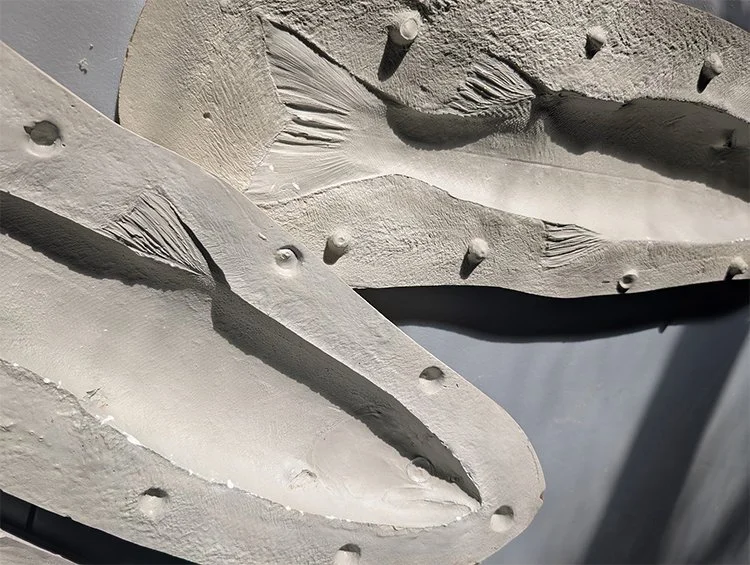
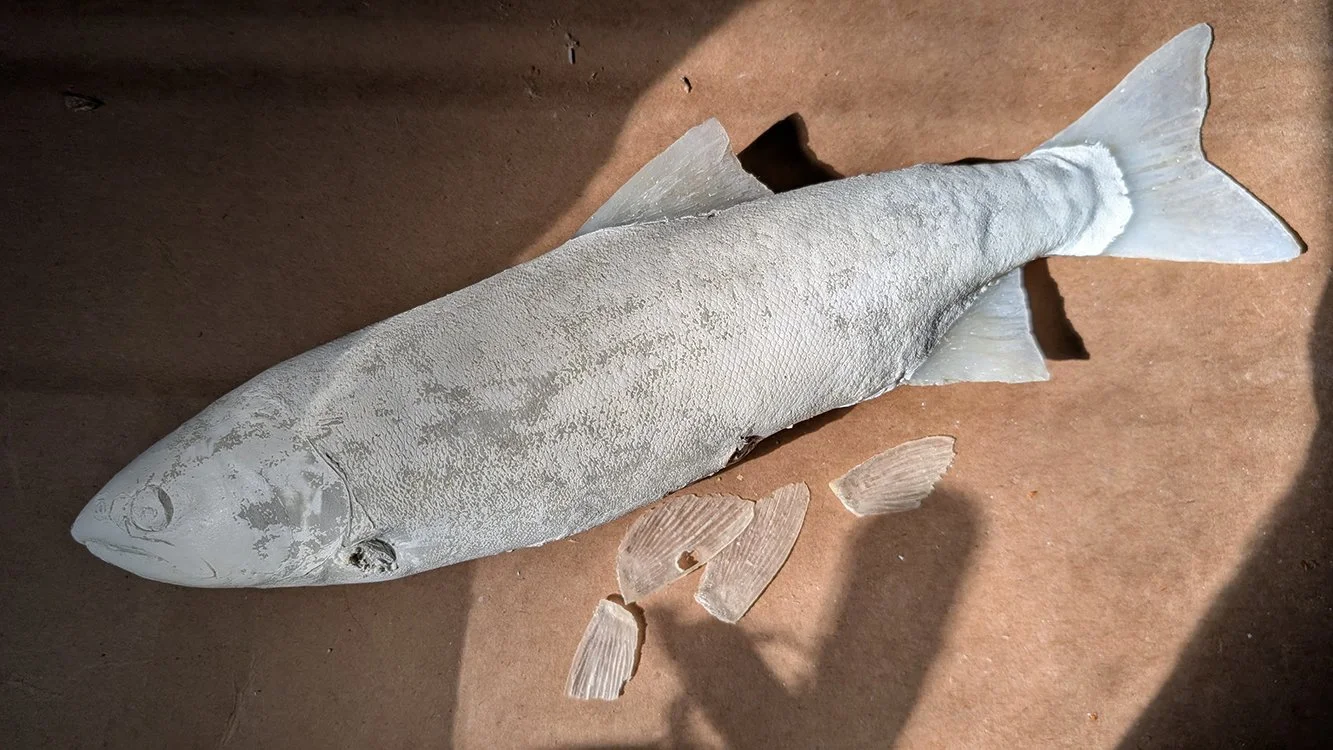
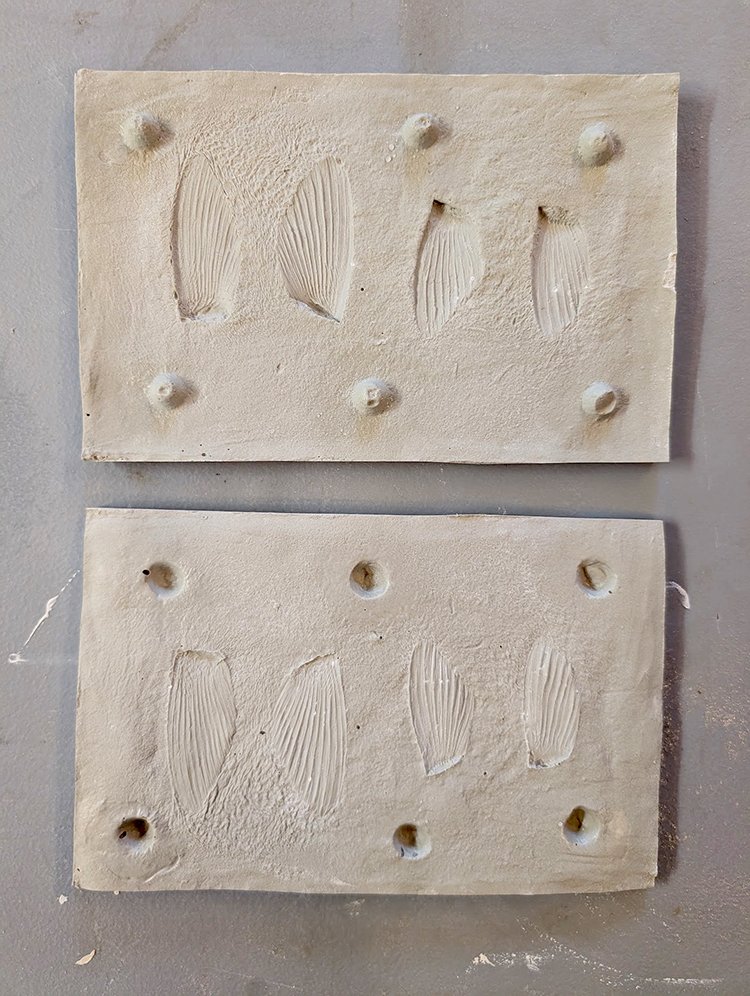
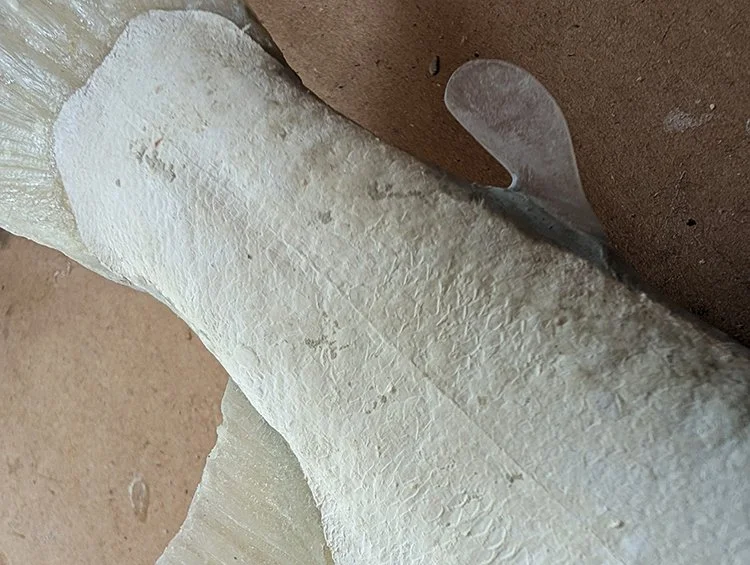
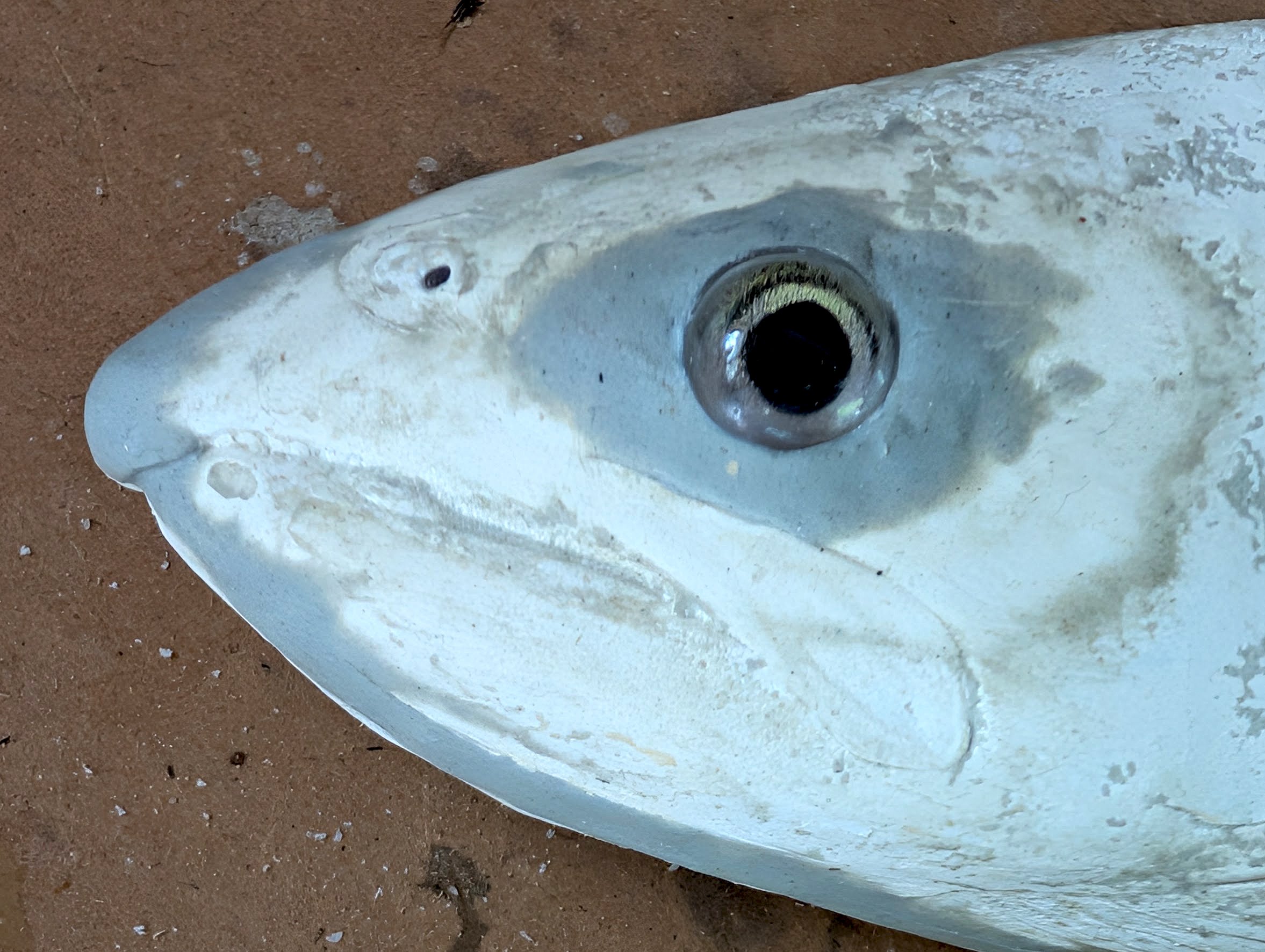
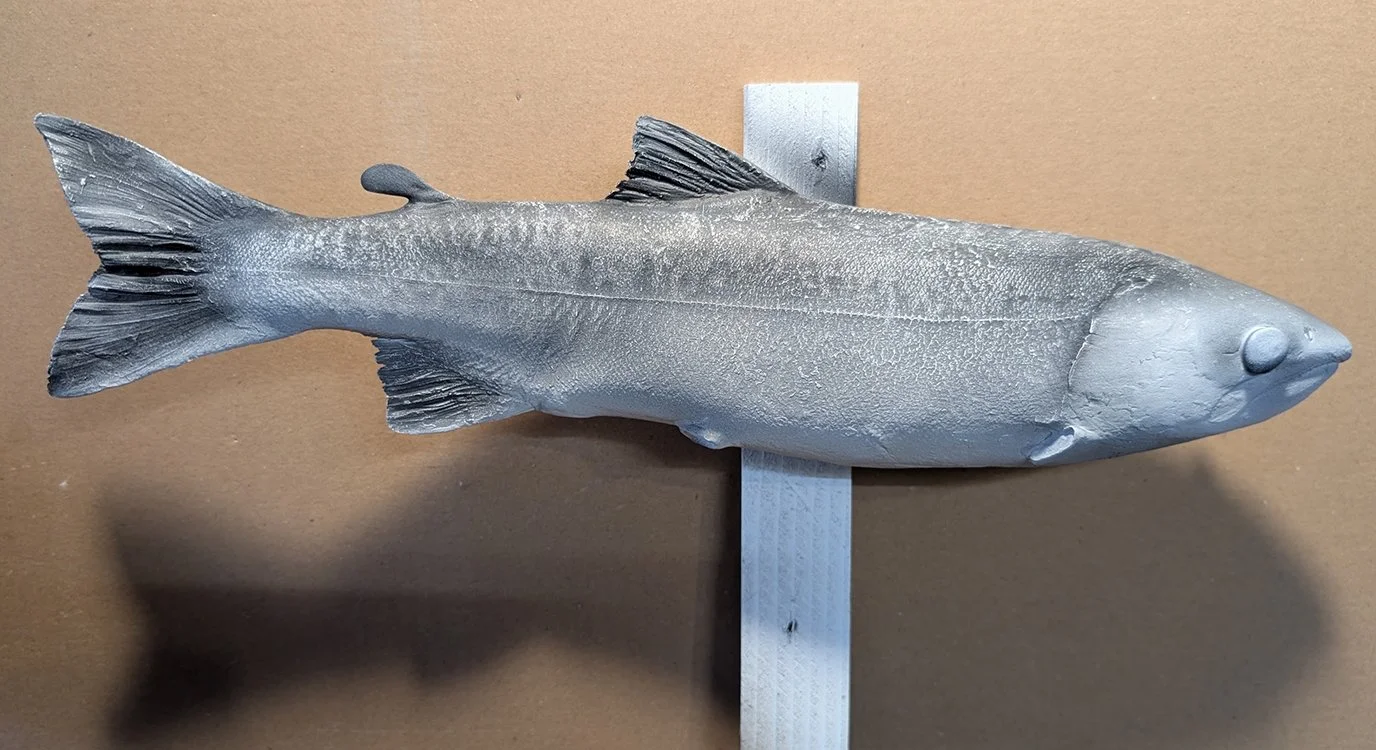
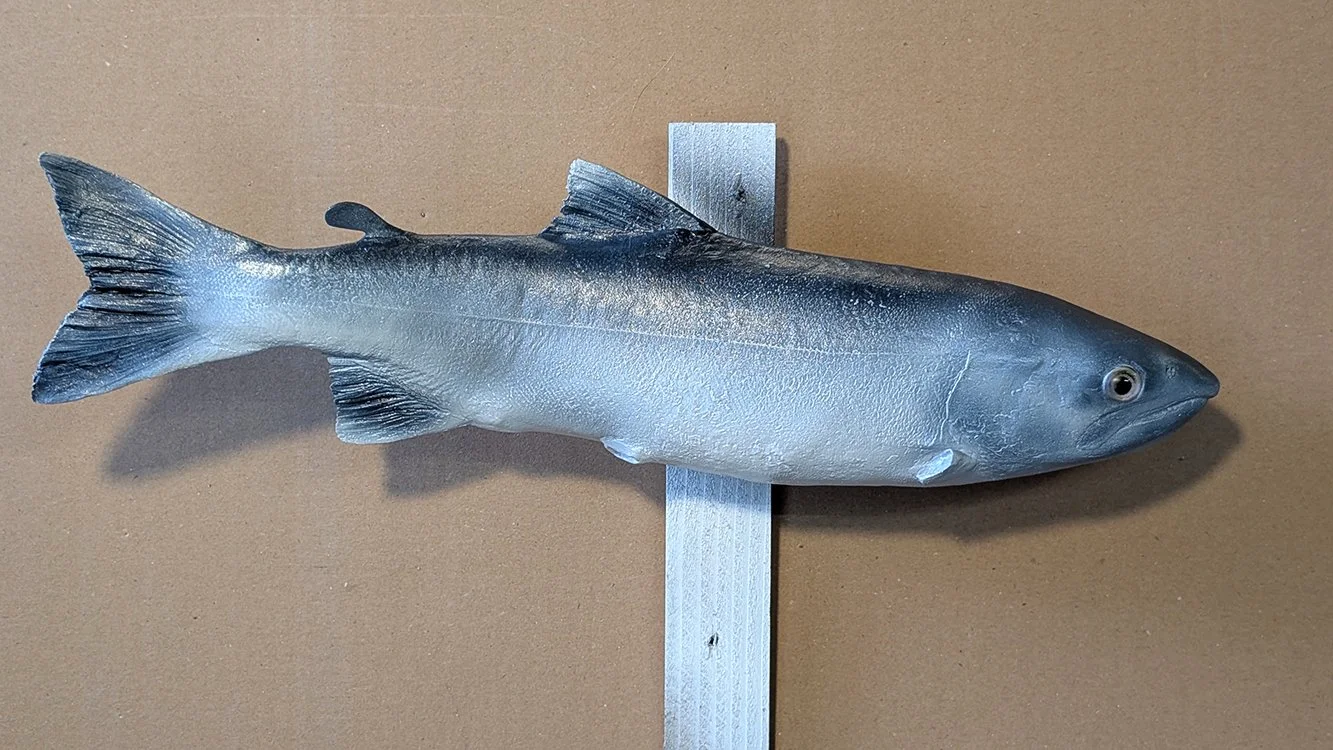
My first attempt at a two sided, full body cast of a chinook salmon jack. The molding went well, but it completely fell apart during the casting process. For whatever reason the two halves did not bond. I am not sure if it was due to the sloppy shelf or inadequate curing time. However, the mouth plug and fins did come out well, and I consider that a small success.
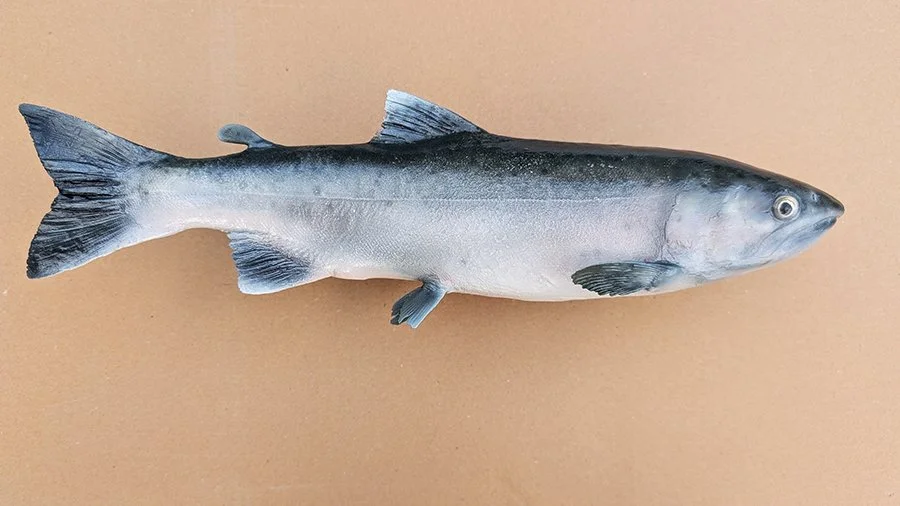
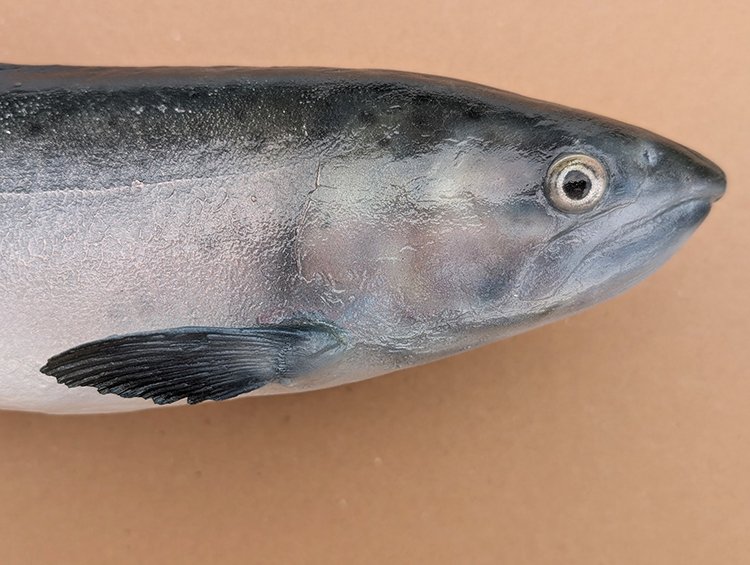
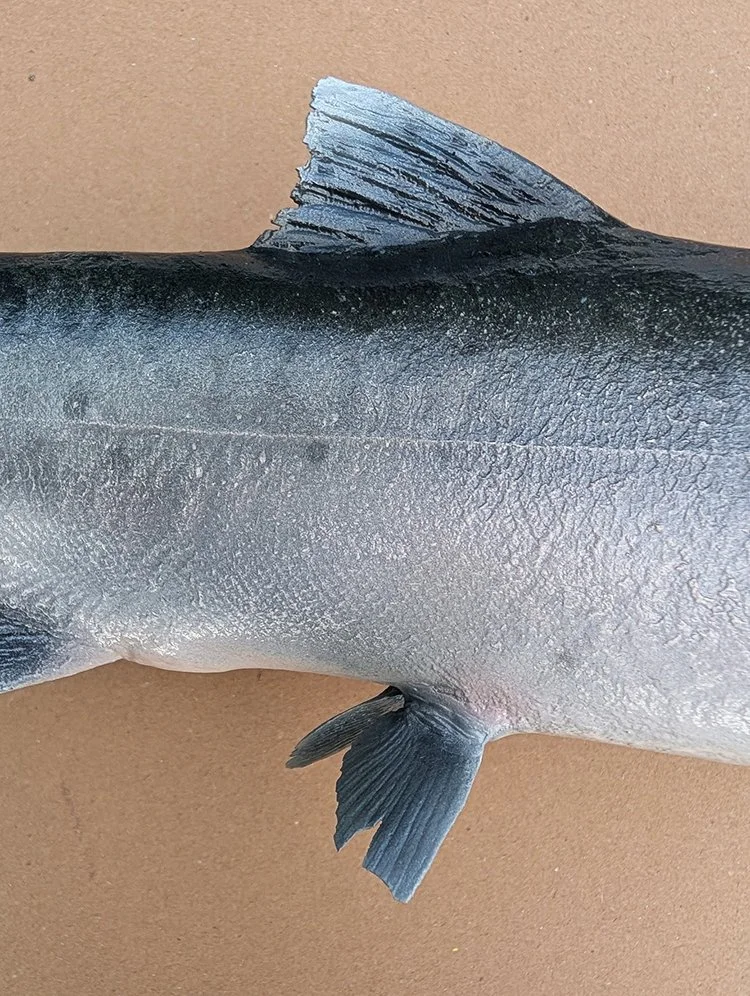
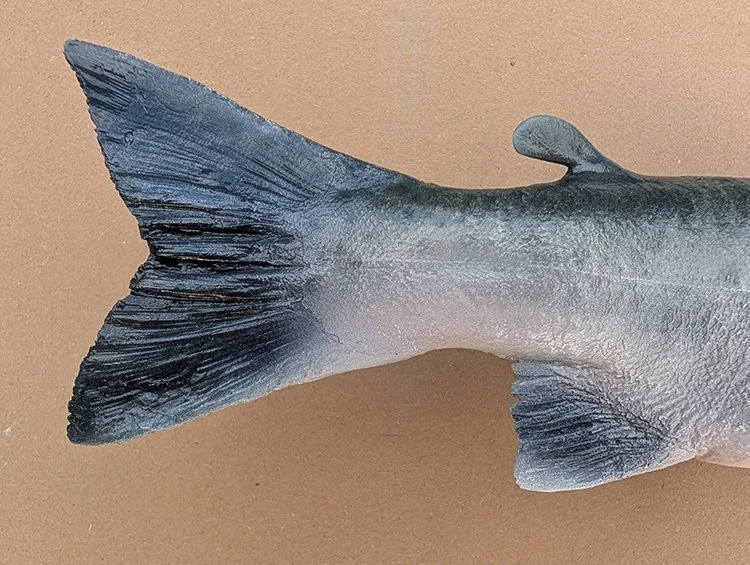
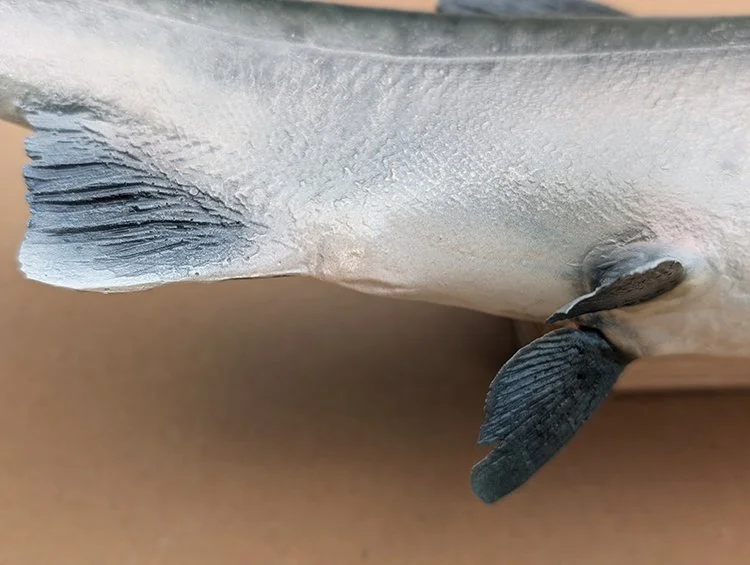
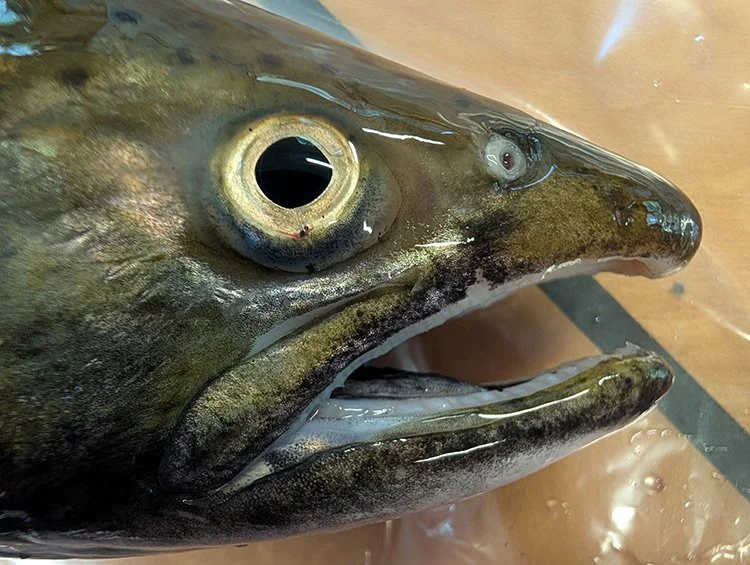
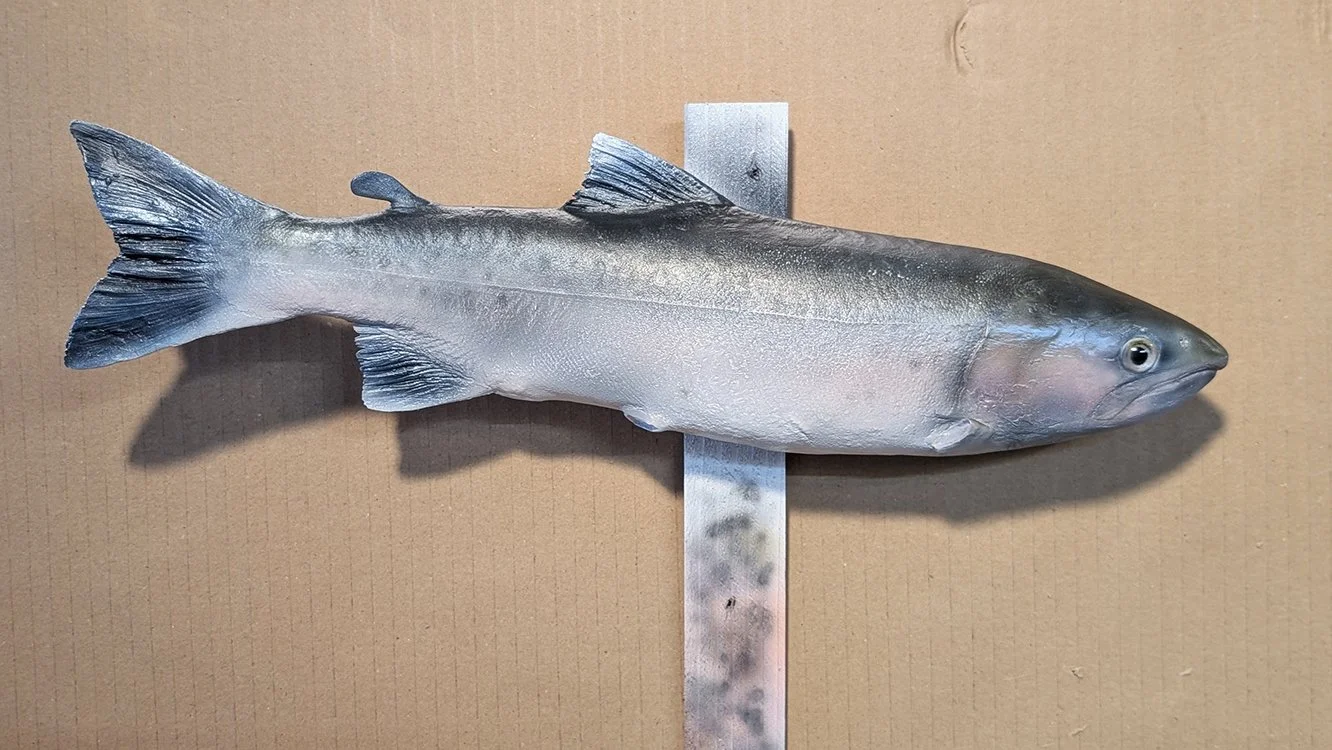
A handsome coho salmon I molded, then cast in resin. The eyes were set, and after minor sculpting, it was painted with an airbrush using acrylic paints, opaque and iridescent. I colored it as it would look migrating from the vast salt ocean to its final destination in a small coastal stream.
A plaster cast of my first bluebill. A drake I killed (and later ate, gizzard, heart and all). Taken near the Columbia River.
A drawing of a Bison latifrons skeleton that was never fully realized.
Rreference was photographed in the Utah Museum of Natural History.
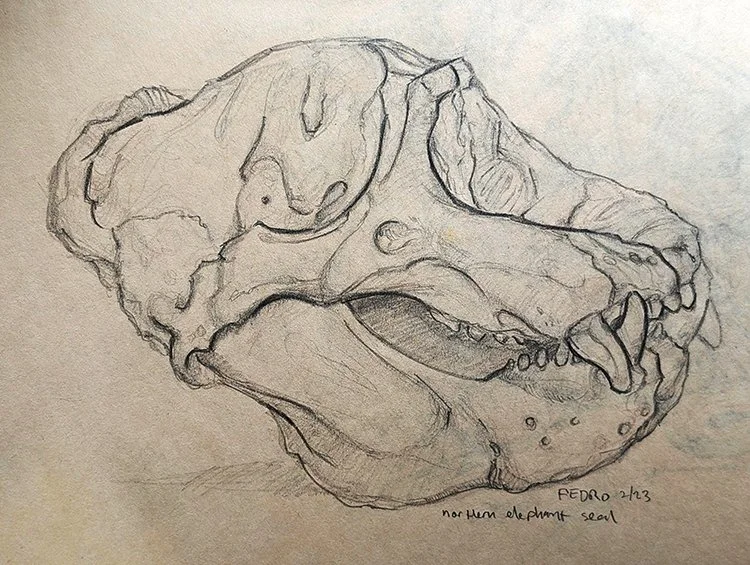
Cave Bear Skull
Graphite and Pastel
Saiga Antelope for Jaimie
A strange and wonderful animal for my lady.
16” X 11”
Acrylic on Panel
detail
progress
These creeps have been burrowing through mud flats since the supercontinent Pangea began breaking apart, and the first flowers bloomed. I can find living ones and fossilized ones within 20 miles of each other.
Mud, or sand shrimps are widely regarded as a supurb fishing bait for salmon, steelhead, and sturgeon. A nightmare to keep on a hook, use an egg loop, Miracle Thread or a similar elastic thread.
My reference specimens were dug near Seaside, Oregon, taken home and photographed.
9” X 14” Acrylic on Panel
Detail
Above: A Freshly dug, live shrimp, I pumped fresh from a mudflat.
Opposite: Claw parts; carpus, propodus, fixed finger and dactylus of a fossilized shrimp I found along the Columbia River.
Shrimp anatomy and natural history reference - https://depositsmag.com/2017/07/04/the-abundant-yet-understudied-fossil-record-of-ghost-shrimps/
Molding and casting a lingcod head half cast for reference.
This ling was caught outside of Depot Bay, Oregon in June. The head was removed during filleting, cleaned and bedded in fibre. The mold was cast in paster and cast in fiberglass resin.
The finish, cleaned up with a Dremel, primed and slightly antiqued by dry brushing with acrylic paint.
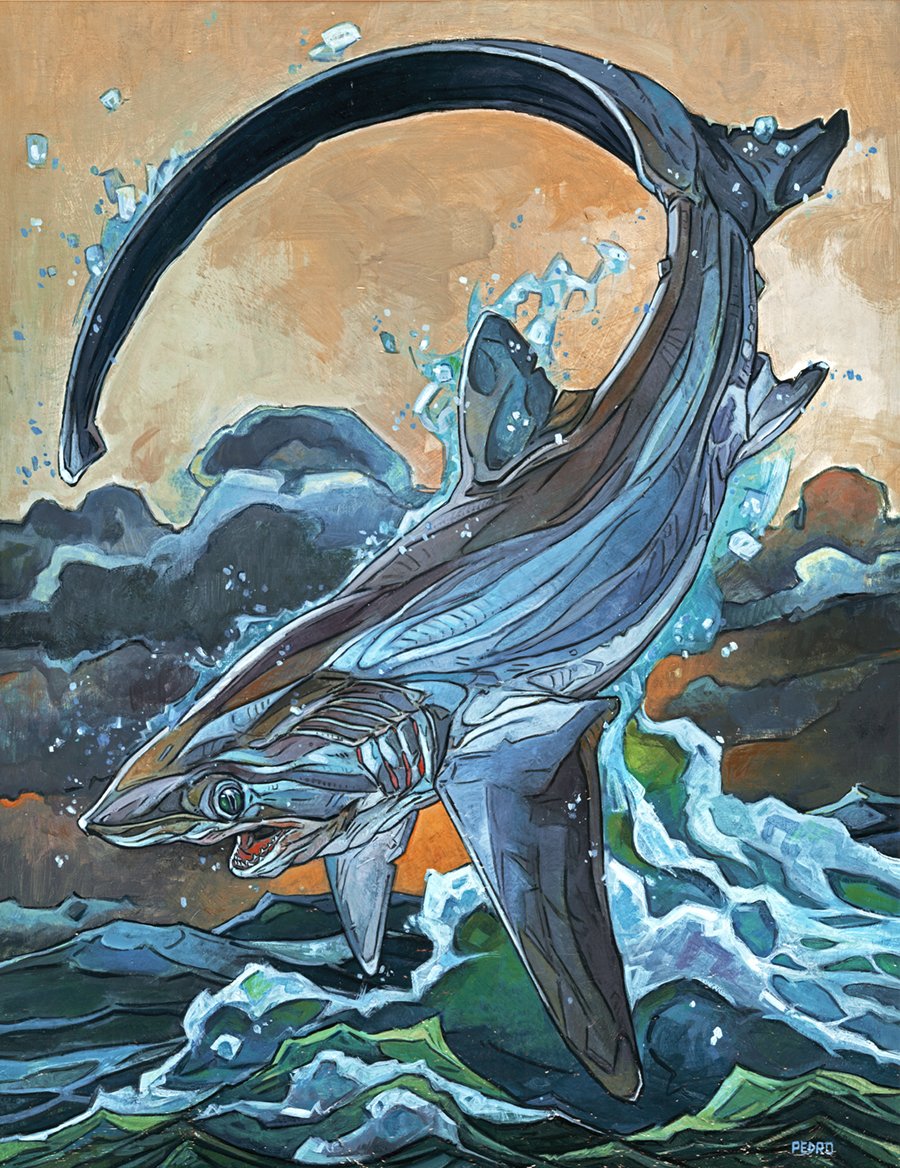
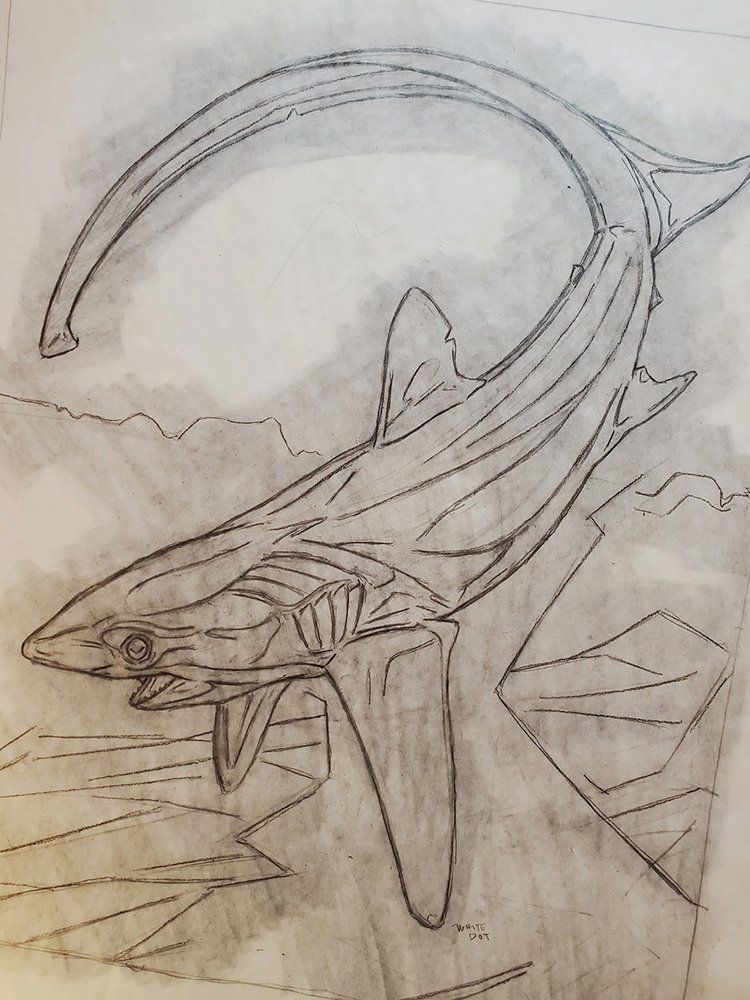
Slashing its extraordinary tail, a thresher shark breaks free from the water.
There’s no doubt in my mind that the thresher shark is one of the most spectacular fish in the sea. I’ve had this picture in my mind for around 2 years. Originally I wanted the shark to be hooked in the mouth, with the line trailing off to the right, out of the picture, to an unseen sportfishing boat. I changed my mind for two reasons, 1) I thought the line became too distracting and broke the composition flow, and 2) is there any reason to fish for sharks anymore? I don’t know but I doubt it. So I imagined this shark slashed at a school of baitfish, and its momentum caused it to break the water’s surface, and for some really lucky reason, you were there to see it.
* I stole the brownish sky color from Winslow Homer’s Gulf Stream.
Acrylic on Panel
16” X 20”
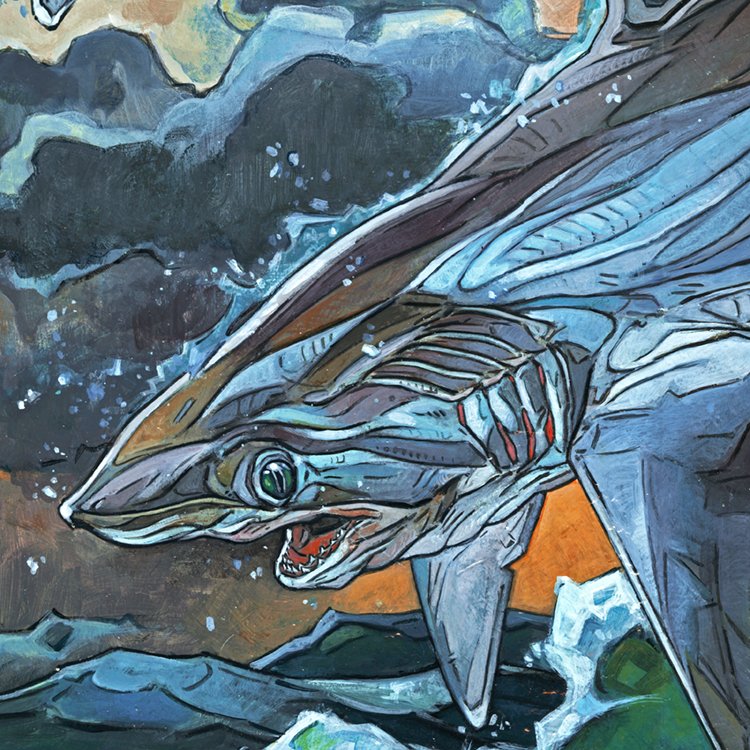
detail
original drawing / design
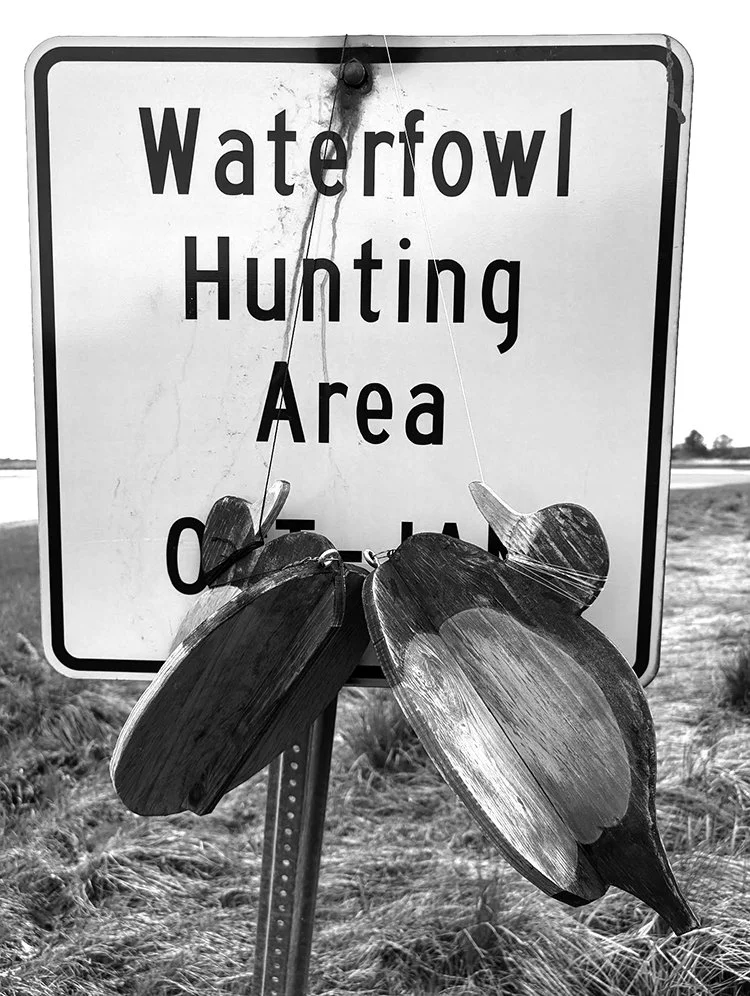
I carved a small Ringed Plover decoy from basswood, following an Anthony Hillman pattern. I painted it to look old and weathered. Then we went to the beach.
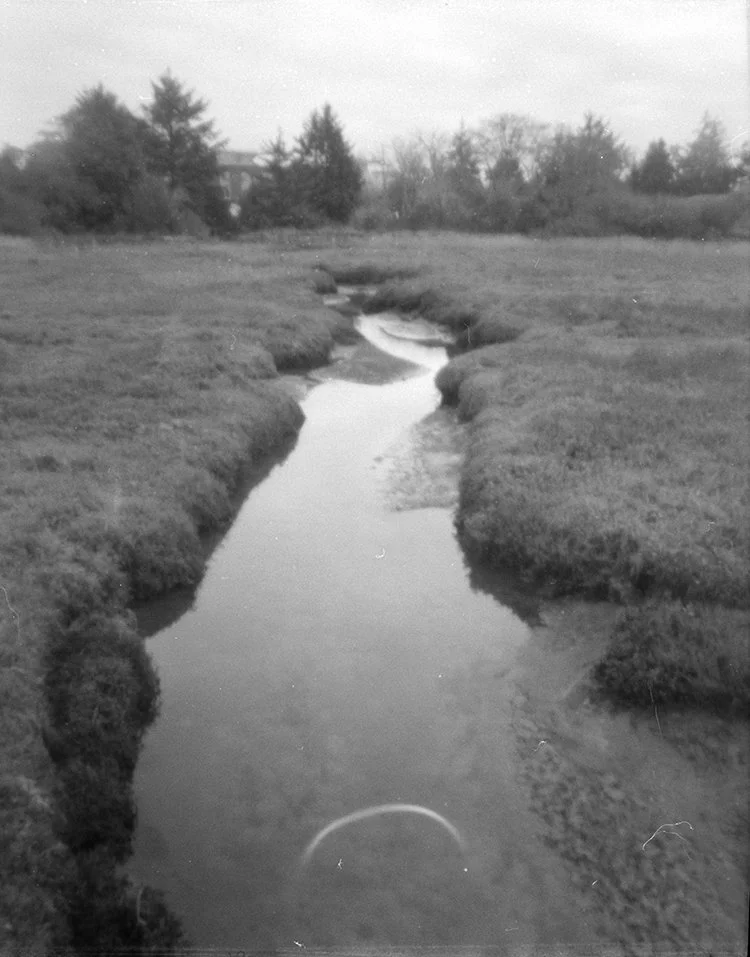
I was recently successful developing my own b/w negatives at home using the Ilford Simplicity Starter Pack. I developed two rolls of Kodak T-Max 400. Previously I would have had to drive 60 miles to Portland to have them done. It feels good to have done it myself. I really enjoy the process and the anxiety that comes with it, to figure out the chemistry and timing, and finally to pull the negatives from the reels and hold them to the light to see the images for the first time. It’s all very satisfying.
Acrylic on Panel
5” X 7”
Sketch for my acrylic painting, Mojarra Negra.
Pencil on Newsprint
Acrylic on Wood 5” X 7”
Drawings and animation of a Saber Toothed Cat skull. Pencil on newsprint.
A drake Hooded Merganser, printed using black oil based ink on Yasutomo Rice Paper from a cut block of linoleum.
The Print.
9 1/2” X 13” Black Oil Based Ink on Rice Paper
The Cut Block